

You are typing a birthday message in a hurry, your fingers are flying, and you stop halfway through the word — the surprise or suprise question again. Is it “surprise” or “suprise”? You have typed the second version plenty of times before, and it never looked all that wrong. Here is the short answer: “surprise” is correct, and “suprise” is a misspelling. The word has two Rs in it — one near the start and one near the end — and the second R is the one most people drop.
That missing R is not a small detail. It turns a perfectly normal word into one that no dictionary recognises, and in a work email, a school essay, or a job application, it reads as a spelling slip. The good news is that once you know why your fingers keep skipping that letter, the correct spelling sticks for good. This guide explains the rule, shows you the word in real sentences, and gives you a memory trick so you never have to pause mid-message again.
Related Post: What Does FOMO Mean?
Quick Answer

“Surprise” is the correct spelling. “Suprise” is a misspelling — the word needs two Rs, and the second one comes after the “p”.
That is the whole rule in one line. The word is spelled S-U-R-P-R-I-S-E. Say it slowly and you can hear both Rs: sur-prise. The first R sits right after the S, and the second R sits right after the P.
- Always write "surprise" with two Rs in formal writing, schoolwork, work emails, and published articles.
- "Suprise" is not a word in any major dictionary — Oxford, Cambridge, and Merriam-Webster all list only "surprise".
- Your spellchecker will usually flag "suprise" with a red underline or quietly correct it to "surprise" — trust it on this one.
- The mistake is extremely common, so if you have been writing "suprise" for years, you are far from the only one. It just takes a little practice to fix.
What Does Surprise Mean?
"Surprise" is one of those everyday words that does a lot of heavy lifting. As a noun, it means something unexpected — an event, a gift, or a piece of news that you did not see coming. As a verb, it means to catch someone off guard, to give them something they were not expecting. Either way, the heart of the word is the same: something happens that you did not predict.
Look at how the meaning shifts slightly depending on how you use it:
- An unexpected event: "The party was a surprise — she had no idea we were all hiding in the living room."
- An unexpected gift or treat: "He left a surprise on her desk: a box of her favourite chocolates."
- A feeling: "You could see the surprise on his face when he opened the envelope."
- To catch someone off guard: "The news surprised everyone in the office."
- Something sudden or startling: "The sudden rain was a surprise to the walkers, who had set out in bright sunshine."
The word can be warm or awkward, joyful or uncomfortable. A surprise party is a delight; a surprise bill is not. What ties all of these together is the same thing: the unexpected.
Why Do People Write Suprise?
If "surprise" is spelled with two Rs, why does "suprise" show up so often? It is not laziness. It is the way the word sounds, the way your fingers move, and the way your brain stores words all working against you at once.
The first reason is pronunciation. In fast, everyday speech, the second R in "surprise" almost disappears — most people say something close to "suh-prize". Your ears hear one strong R at the start and one faint one in the middle, so when you go to write the word down, your brain happily writes what it heard: "suprise".
The second reason is speed. "Surprise" is a word people type in a rush — in birthday messages, in group chats, in quick emails. When you are typing fast, your fingers take shortcuts, and the second R is an easy one to skip. The same thing happens with words like "February" and "Wednesday", where a letter quietly vanishes because your fingers are in a hurry.
Here are the other reasons the misspelling keeps spreading:
- Autocorrect learns from you. If you have typed "suprise" a few times, some keyboards start suggesting it, and then you tap it without thinking. Autocorrect learns from what people type, not from what is correct.
- You see it everywhere. The more you see "suprise" in comments, captions, and messages, the more normal it starts to look. A wrong spelling seen a hundred times can start to feel right.
- Nobody corrects it in casual writing. In a text to a friend, nobody is going to stop the conversation to point out a missing R. The mistake goes unchallenged, so it never gets fixed.
None of this makes "suprise" correct. It just explains why it is so common. And common is not the same as right — millions of people write "alot" instead of "a lot" too, and that does not make "alot" a word either.
Surprise or Suprise Compared
The easiest way to settle the surprise or suprise question is to see the two spellings side by side. One is a real word, one is a mistake, and the difference is a single letter.
| Form | Correct? | Example |
|---|---|---|
| surprise | Yes — the only correct spelling | "It was a lovely surprise." |
| suprise | No — a common misspelling | "It was a lovely suprise." (wrong) |
| surprised | Yes — the past tense and adjective form | "She was surprised by the gift." |
| suprised | No — the same mistake in the past tense | "She was suprised by the gift." (wrong) |
| surprising | Yes — the adjective form | "It was a surprising result." |
| suprising | No — the same mistake in the adjective form | "It was a suprising result." (wrong) |
Read that table again and notice the pattern. The mistake follows the word wherever it goes. If you drop the second R from "surprise", you will drop it from "surprised" and "surprising" too, and every form of the word will look wrong. That is why it is worth fixing the habit at the root: learn "sur-prise" once, with both Rs, and the rest of the family follows automatically.
Related Post: What Does SMH Mean In Text?
Correct vs Incorrect: Quick Pairs to Learn From
The fastest way to learn a spelling rule is to see the right and wrong versions next to each other. Read each pair below and say the correct one out loud — hearing it helps it stick.
| Correct | Incorrect |
|---|---|
| "I have a surprise for you." | "I have a suprise for you." |
| "She was surprised by the news." | "She was suprised by the news." |
| "It was a surprising turn of events." | "It was a suprising turn of events." |
| "Don't spoil the surprise!" | "Don't spoil the suprise!" |
| "Surprisingly, it rained all afternoon." | "Suprisingly, it rained all afternoon." |
Look closely at the pairs and say the correct sentences out loud, one at a time. It sounds like a small thing, but hearing yourself say "sur-prise" with both Rs lands the spelling in a different part of your memory than reading it does. After five or six repetitions, your fingers start to expect the second R, and the misspelling stops feeling natural.
A Simple Memory Trick
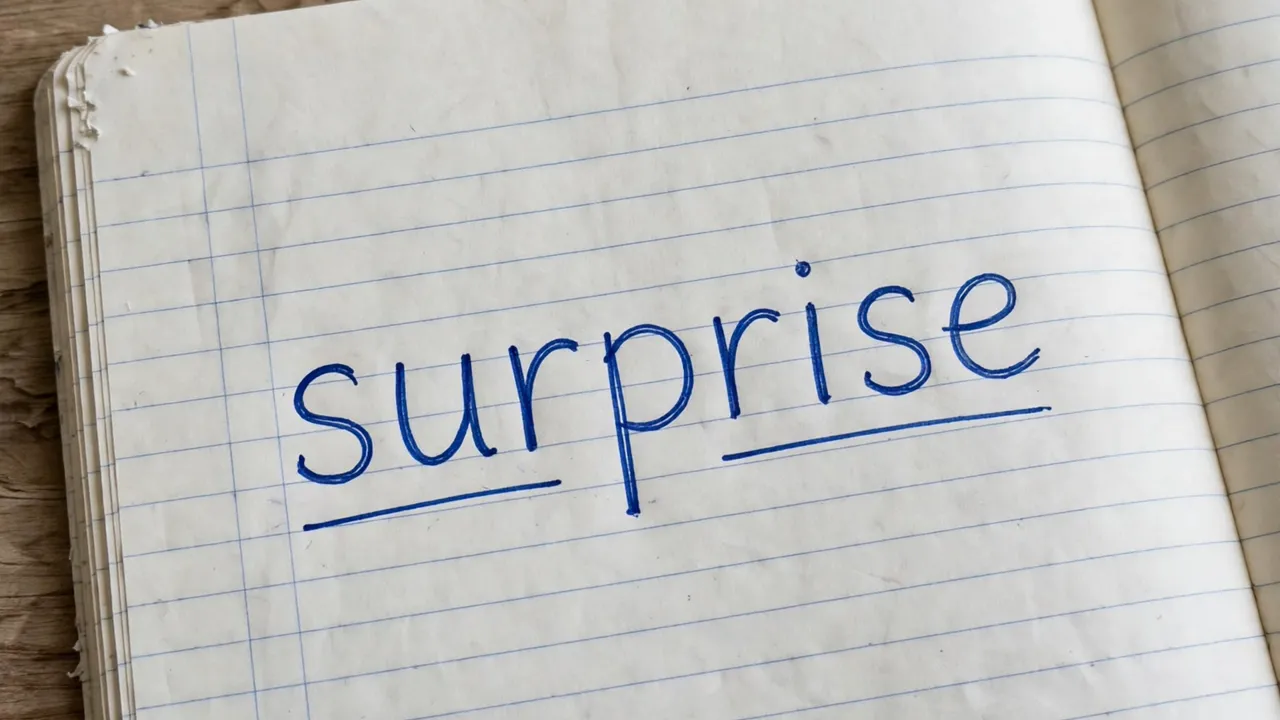
Here is the trick that fixes this spelling for most people: think of the word as two halves — "sur" and "prise" — and give each half its own R. The first half, "sur", has an R at the end. The second half, "prise", starts with a P and then has an R of its own. Two halves, two Rs. If you only count one R, you have only written half the word properly.
Another way to remember it is to link the word to its meaning. A surprise is something that jumps out at you — and the letter R jumps out twice. Say it like a little chant in your head: "sur-PRIZE, two Rs, one prize." The word even ends with the sound of "prize", and a surprise often is a prize of sorts: a gift, a party, a bit of good news you did not expect. The "prize" inside "surprise" is a handy anchor, and once you see it, it is hard to unsee it.
Whichever trick clicks for you, use it every time you write the word for the next week. The goal is not to recite a rhyme forever — it is to repeat the correct spelling until your fingers do it without thinking. After that, the trick can fade away, because the habit has taken its place.
Examples in Real Life: Texts and Emails
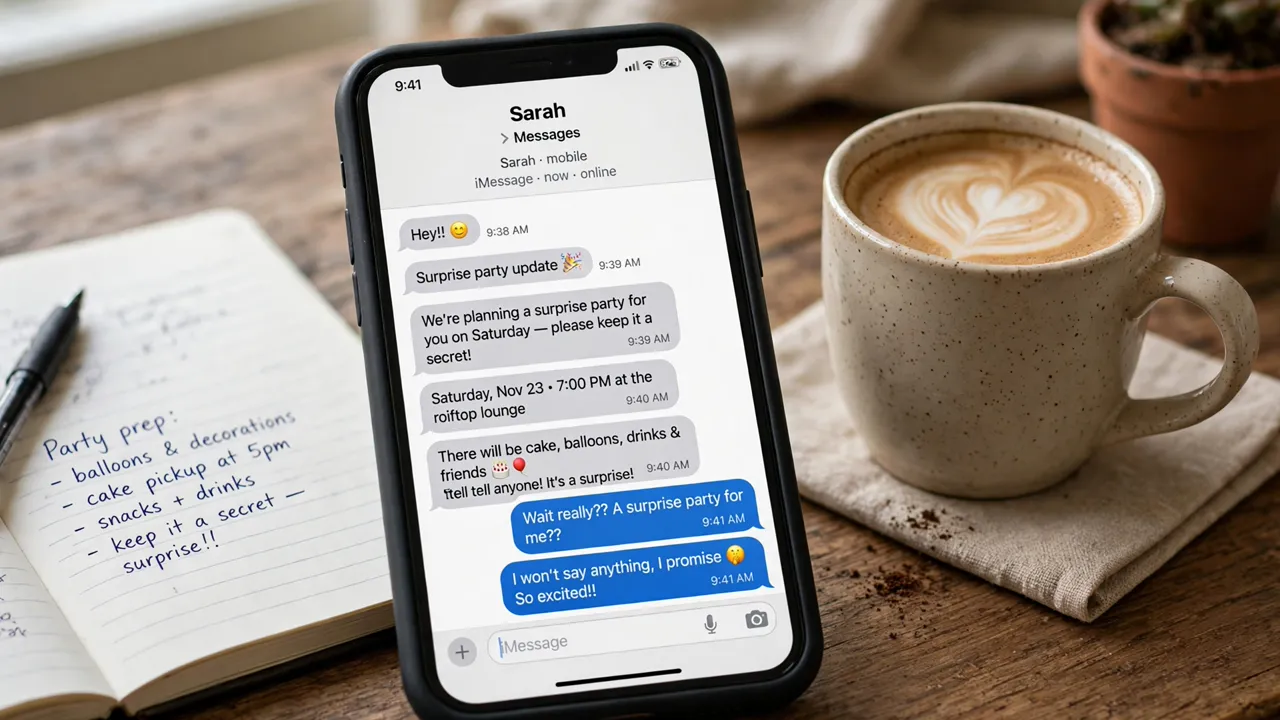
Here is the word doing its normal job in the places you actually write.
In text messages, "surprise" shows up constantly, usually when someone is planning something secret or reacting to news:
- "Don't tell her — it's a surprise party on Saturday!"
- "I have a surprise for you when you get home."
- "Surprise! I booked us tickets for Friday night."
- "He was so surprised, he nearly dropped his phone."
Notice how natural the correct spelling looks in a chat bubble. If you wrote "suprise" in any of those messages, your friend would still understand you — but the message would look a little less polished. And if you are the kind of person who reads up on what NGL means in texting to keep your messages sharp, the same habit applies here: small details add up.
In emails, the word is a workhorse for announcements, gifts, and the occasional awkward piece of news:
- "We have a surprise announcement to share at Friday's meeting."
- "Thank you for the surprise gift — it made my whole week."
- "The results were a surprise to everyone on the team, in the best possible way."
In a professional email, spelling matters more than it does in a chat, because the reader is judging your attention to detail. A hiring manager who spots "suprise" in a cover letter may not reject you for it, but it is the kind of small slip that adds up with others. Two Rs, every time, in every work email.
Common Mistakes with Surprise
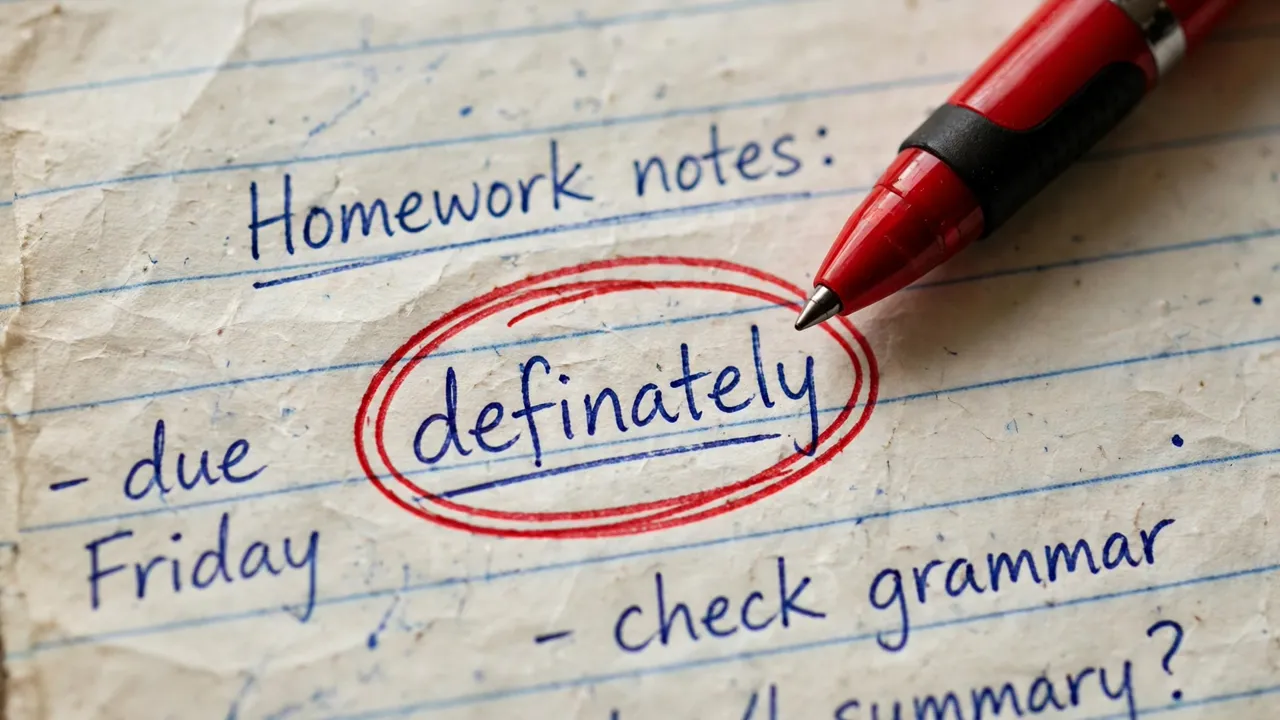
Even people who know the rule slip up, usually for the same few reasons. Here are the mistakes to watch for, so you can catch them in your own writing before anyone else does.
- Writing "suprise" in formal writing. In a text it is harmless, but in an essay, a job application, or a work email it reads as a spelling error. Always use both Rs in formal contexts.
- Dropping the R in the other forms too. "Suprised" and "suprising" are the same mistake wearing a different ending. If you fix "surprise", fix the whole family at the same time.
- Trusting autocorrect too much. Some keyboards have learned "suprise" from their users and will happily suggest it. Check the suggestion before you tap it — autocorrect is a helper, not an authority.
- Rushing the word in messages. The faster you type, the more likely the second R is to vanish. Slow down for half a second on this one word, and the rest of the sentence can go as fast as you like.
If you enjoy untangling this kind of everyday confusion, you will like the guide to inbetween or in between — another pair of spellings that trips people up every day — and the No Cap meaning guide for a slang phrase that causes just as much head-scratching.
FAQs
Is suprise a word?
No. "Suprise" is not a word in standard English. No major dictionary lists it, and style guides treat it as a misspelling of "surprise". If you see it in a comment or a caption, the writer simply dropped the second R.
What is the correct spelling: surprise or suprise?
"Surprise" is correct. The word is spelled S-U-R-P-R-I-S-E, with an R after the S and another R after the P. "Suprise", with only one R, is a common misspelling. British and American English both use the same spelling.
Why is surprise spelled with two Rs?
The word comes from Old French "surprendre", meaning to take suddenly or to seize, and it carried both Rs with it into English. The "sur" part and the "prise" part each keep an R. It feels like one R too many because in fast speech the second R is barely pronounced — but it is there in the spelling, and it always has been.
What does surprise mean?
As a noun, "surprise" means something unexpected — an event, a gift, or a piece of news you did not see coming. As a verb, it means to catch someone off guard or to give them something they were not expecting. It can be joyful, like a surprise party, or unwelcome, like a surprise bill. Either way, the heart of the word is the unexpected.
Can I use "suprise" in a text message?
You can — your friends will understand you, and nobody proofreads a text the way they proofread an essay. But it is still a misspelling, and building the two-R habit in casual writing makes it automatic in formal writing, where it matters.
How do I remember to spell surprise correctly?
Split the word into two halves — "sur" and "prise" — and remember that each half has its own R. Two halves, two Rs. Another handy anchor is the word "prize" hiding at the end of "sur-prise": a surprise is often a prize of sorts, and "prize" starts with the same P-R.
Conclusion
The answer is simple, and it is worth remembering: "surprise" is correct, spelled with two Rs. "Suprise" is a misspelling, even though you will see it in comments, captions, messages, and plenty of casual writing online. The mistake is so common because the second R is barely pronounced in fast speech, and because fingers in a hurry skip it — but common is not the same as correct.
So the next time you are typing fast and that pause arrives, remember the two halves — "sur" and "prise" — and give each half its own R. It is a tiny detail, but tiny details are what make writing look polished.
Related Post: What Does TTYL Mean In Text?

Emily here. I write about puns, slang, and the quirky side of language because words are funnier than people give them credit for. Four years in, and I still laugh at my own jokes. Someone has to.
