

Have you ever seen your friends posting pictures from a party you didn’t attend and felt like you were missing out on something exciting? Or have you checked social media again and again because everyone seems to be doing something fun without you? That feeling has a name: FOMO.
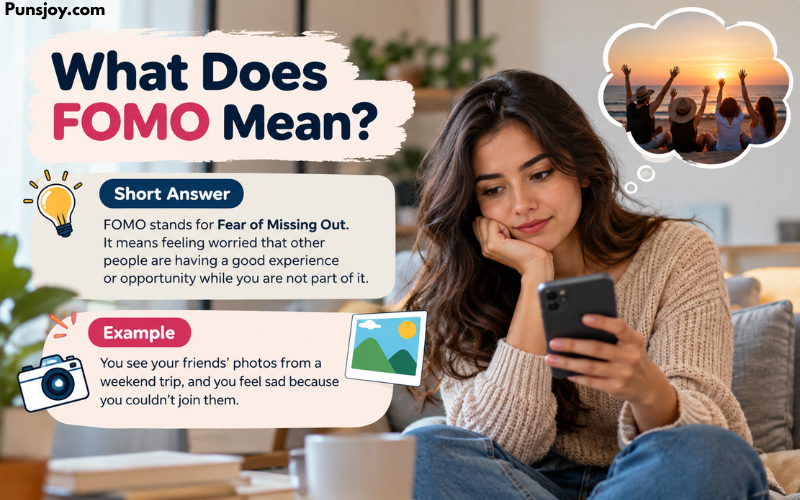
FOMO stands for Fear of Missing Out. It describes the worry that other people are enjoying exciting experiences, making memories, or taking advantage of opportunities while you are not part of them. The term is common on social media, in text messages, in everyday conversations, and even when people talk about shopping, friendships, relationships, and work.
I often think of FOMO as that little voice in your head that says, “What if everyone else is having a better time than me?” It can make you curious about what other people are doing, but sometimes it can also leave you feeling anxious or pressured to join activities you don’t really want to attend.
The good news is that FOMO is a common human experience. Understanding what it means, how people use it, and why it happens can help you recognize the feeling and respond to it in a healthier way.
What Does FOMO Mean?
FOMO means Fear of Missing Out. It is a feeling of worry, sadness, or anxiety that you might miss an enjoyable experience, an important event, a social opportunity, or something valuable that other people are experiencing.
People usually use FOMO when they feel left out or believe they might be missing something exciting. For example, if your friends go to a concert without inviting you, you might experience FOMO when you see their photos online.
The feeling is not limited to parties or social gatherings. Someone might feel FOMO after seeing a friend travel abroad, a colleague receive a promotion, or other people buy a popular product.
Here are a few simple examples:
- Your friends go out for dinner, and you feel sad because you stayed home.
- You see people attending a music festival and wish you had bought tickets.
- Everyone at work seems to be talking about a new opportunity, and you worry that you are falling behind.
- You see a trending product online and feel that you must buy it before it becomes unavailable.
- Your friends are discussing an inside joke from a gathering you missed, and you feel disconnected.
In each situation, the main idea is the same: you worry that something good is happening without you.
FOMO can happen even when you have no real reason to believe you are missing something important. Sometimes, the feeling comes from comparing your ordinary day with the exciting moments other people choose to share.
What Does FOMO Mean in Texting?
In texting, FOMO has the same meaning as it does in everyday life: Fear of Missing Out. People often use it in casual conversations with friends, family members, or online contacts.
Instead of typing the full phrase, they write FOMO because it is shorter and easy to knowing.
For example:
Friend 1: “We’re all going to the beach this weekend!”
Friend 2: “I might join you. I don’t want to get FOMO again 😂”
Here, the person is saying that they do not want to feel left out while their friends enjoy the trip.
Another example:
Person 1: “Did you see everyone’s pictures from the concert?”
Person 2: “Yes! Major FOMO right now.”
This means the second person wishes they had attended the concert and feels they missed an exciting experience.
You might also see messages such as:
- “I’m getting serious FOMO from your vacation pictures.”
- “Everyone is going to the party. Don’t give me FOMO!”
- “I have FOMO because I couldn’t make it last night.”
- “This event looks amazing. I don’t want to miss out.”
- “My friends are watching the new movie without me. FOMO is real.”
FOMO can be used seriously, jokingly, or playfully. The meaning depends on the conversation and the person’s tone.
What Does FOMO Mean on Social Media?
On social media platforms such as Instagram, TikTok, Snapchat, and Facebook, FOMO often describes the feeling you get when you see other people enjoying experiences you are not having.
Imagine opening Instagram after a long day at home. You see one friend at a concert, another enjoying dinner at a beautiful restaurant, and someone else relaxing on a beach. Suddenly, your own evening feels boring.
That reaction is a common example of social media FOMO.
Social media makes it easy to see what other people are doing throughout the day. However, people usually share selected moments rather than their entire lives. A photograph might show a beautiful holiday, but it does not reveal the travel problems, expenses, tiredness, or ordinary moments that came with it.
I find this distinction especially useful: seeing someone else’s highlight does not mean your own life is falling behind.
Here are some common examples of FOMO on social media:
- Watching stories from a party you were not invited to.
- Seeing friends travel to places you have always wanted to visit.
- Noticing that everyone seems to be following a new trend.
- Seeing couples post romantic pictures and feeling unhappy about your own relationship status.
- Watching people celebrate achievements and worrying that you are not progressing quickly enough.
Social media can create a sense of urgency because new posts and updates appear constantly. If you are already feeling lonely or uncertain, these updates may make those feelings stronger.
That does not mean social media always causes FOMO. It simply provides more opportunities for comparison, especially when you spend a lot of time checking what other people are doing.
What Does FOMO Mean in a Relationship?
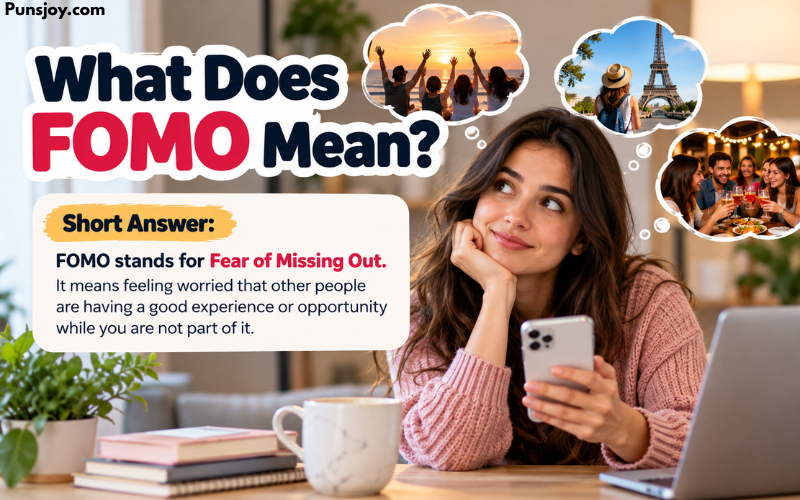
In relationships, FOMO can mean worrying that your partner, friends, or other people are having experiences that you are not part of.
For example, someone might feel uncomfortable when their partner goes out with friends. They may wonder whether their partner is having more fun without them or whether they are missing important moments in the relationship.
FOMO can also affect friendships. You might feel upset when your close friends make plans without you, especially if you discover those plans through social media rather than hearing about them directly.
Here are some relationship-related examples:
Example 1: Your partner goes out without you.
Your partner attends a birthday party with friends, and you spend the evening wondering whether you should have gone too. You may experience FOMO because you are missing a social event.
Example 2: Your friends meet without inviting you.
You discover that your friends went shopping together. You feel hurt because you wanted to be included in their plans.
Example 3: You compare your relationship with others.
You see other couples taking expensive trips and sharing romantic surprises. You start worrying that your own relationship is less exciting.
It is important to remember that FOMO does not automatically mean you are jealous, insecure, or in an unhealthy relationship. Sometimes, it simply reflects a normal desire to feel included and connected.
However, if FOMO regularly leads to arguments, constant checking, or pressure to control another person’s activities, it may help to discuss your feelings openly.
Instead of accusing someone of leaving you out, try explaining what you need. For example, you could say, “I felt a little left out when I saw the pictures. I’d love to plan something together soon.”
Clear communication is usually more helpful than making assumptions about what another person is thinking.
What Does FOMO Mean in Slang?
FOMO is an informal expression used in modern slang. It is especially popular among people who communicate through text messages, social media posts, memes, and online conversations.
Although the phrase refers to a feeling of anxiety about missing experiences, people often use it in a lighthearted way.
For instance, someone might write, “I bought the tickets because of FOMO.” They mean they purchased the tickets partly because they did not want to miss an exciting event.
Another person might say, “I’m staying home tonight. No FOMO for me.” This could mean they are comfortable missing the event, or they are joking about not wanting to feel left out.
Common slang uses include:
- FOMO is real: The feeling of missing out is strong or relatable.
- Major FOMO: Feeling especially left out or wishing you were somewhere else.
- FOMO hit me: The feeling suddenly appeared.
- FOMO purchase: Buying something because you are afraid of missing an opportunity.
- FOMO kicking in: Starting to feel worried that you are missing something.
- FOMO is getting to me: The feeling is becoming difficult to ignore.
For example, if a friend sends you a video from an amazing birthday party, you could reply, “Major FOMO! I wish I could have been there.”
The expression is flexible, so you do not need to use it in a particular sentence structure. As long as the conversation is about missing an experience or opportunity, the meaning will usually be clear.
Related Post: What Does DPWM Mean in Text?
FOMO Meaning With Examples
The easiest way to knowing FOMO is to look at how people use it in real-life situations.
Example 1: Missing a Party
Your friends attend a birthday party while you stay home to study. Later, they share pictures of everyone dancing and having fun.
You might say, “I’m getting FOMO from these pictures.”
This means you wish you could have attended and are feeling left out.
Example 2: Missing a Concert
A popular singer announces a concert in your city. Your friends buy tickets, but you wait too long and the event sells out.
You see their excitement and think, “I should have bought my ticket earlier.”
That regret can be connected to FOMO because you are worried about missing an experience you wanted to enjoy.
Example 3: Seeing a Travel Post
Your cousin shares photographs from a trip to another country. The scenery looks beautiful, and everyone appears happy.
You might tell a friend, “Their vacation is giving me FOMO.”
You are expressing a desire to have a similar experience.
Example 4: Buying a Trending Product
A product becomes popular online, and influencers keep talking about it. You do not really need it, but you feel that you should buy it before everyone else gets one.
This is an example of shopping-related FOMO. The fear of missing a trend or opportunity may influence your decision.
Example 5: Missing a Group Conversation
Your classmates discuss a funny moment from a gathering you could not attend. Everyone understands the story except you.
You feel disconnected because you were not there when it happened. This is another situation where FOMO can appear.
These examples show that FOMO is not always about being physically present at an event. It can also involve wanting to share memories, knowing conversations, or take advantage of opportunities.
Why Do People Experience FOMO?
People experience FOMO for different reasons. In many cases, it comes from a natural desire to belong, stay connected, and feel that they are making the most of their time.
Here are some common reasons behind the feeling.
1. The Desire to Belong
Most people want to feel accepted by their friends, family, or community. When others share experiences without them, they may worry that they are becoming less connected.
For example, if your friends regularly meet without you, you might wonder whether your place in the group is changing.
This feeling can be particularly strong when friendships are new or when someone is already worried about being excluded.
2. Comparing Yourself With Others
Comparison is another common reason for FOMO.
You might compare your daily routine with someone else’s holiday, your savings with another person’s expensive purchases, or your progress with a colleague’s achievements.
The problem is that these comparisons are rarely complete. You can see what another person has shared, but you may not know the effort, difficulties, or sacrifices behind it.
3. Social Media and Constant Updates
Before social media became widespread, people often learned about events after they happened. Today, photos, videos, and stories can make it seem as if everyone is having an exciting moment at the same time.
This constant stream of updates may encourage people to check their phones repeatedly because they do not want to miss anything.
4. Too Many Choices
FOMO can also appear when you have several attractive options.
Suppose you receive invitations to a wedding, a concert, and a weekend trip on the same day. Whichever option you choose, you know you will miss the others.
Sometimes, the worry is not about being excluded. It is about wondering whether you made the best possible choice.
5. Fear of Falling Behind
FOMO is not always social. It can also happen in education, work, business, or personal development.
You may see colleagues learning new skills, friends starting businesses, or people your age reaching certain goals. You begin to worry that you are falling behind.
This type of FOMO can push you to take useful action, but it can also make you feel as though you must achieve everything at once.
What Is the Difference Between FOMO and JOMO?
FOMO and JOMO describe two different reactions to the possibility of missing an experience.
FOMO stands for Fear of Missing Out, while JOMO stands for Joy of Missing Out.
JOMO is the satisfaction of choosing not to participate in something and feeling comfortable with that decision. Instead of worrying about what everyone else is doing, you enjoy the time and freedom you have.
For example, imagine your friends are going to a crowded party. You decide to stay home because you are tired and want a quiet evening.
If you spend the entire night checking their photos and wishing you had gone, you may be experiencing FOMO.
If you enjoy your dinner, watch a film, and feel happy with your decision, that is closer to JOMO.
| FOMO | JOMO |
| Fear of missing an experience | Enjoyment of your own choice |
| Often involves comparing yourself with others | Focuses on your own needs and preferences |
| Can create pressure to attend every event | Allows you to say no when you want to |
| May lead to unnecessary spending or overcommitment | Can help you protect your time and energy |
| Worries about what others are doing | Appreciates what you are doing now |
Neither term means that you must always attend events or always stay home. Both describe different feelings, and it is normal to experience each at different times.
The goal is to make decisions based on what matters to you rather than allowing the fear of missing out to make every decision for you.
Is FOMO a Bad Thing?
FOMO is not always bad. Like many emotions, it can provide information about what you want, what you value, and where you feel disconnected.
For example, if you feel FOMO when your friends meet without you, it may show that you value those friendships and want to spend more time with them.
If you feel FOMO when colleagues discuss a new professional opportunity, it might encourage you to explore a useful skill or ask about a project.
The problem begins when the feeling becomes overwhelming or starts controlling your choices.
FOMO may lead you to:
- Attend events even when you are exhausted.
- Spend money on things you do not need.
- Check social media repeatedly.
- Feel unhappy with your own life because of comparisons.
- Agree to plans simply because you are afraid of being left out.
- Take on too many responsibilities.
- Make rushed decisions without considering the consequences.
For example, imagine that you are saving money for an important goal, but your friends invite you to an expensive weekend trip. You do not really want to spend the money, yet you agree because you worry that everyone will have fun without you.
In that situation, FOMO may be pushing you to act against your priorities.
I believe the useful question is not, “Will I miss something if I say no?” You probably will miss something. The better question is, “Is this experience worth the time, money, and energy it will cost me?”
That small change in perspective can help you make more thoughtful decisions.
Related Post: What Does SS Mean in Text?
How to Deal With FOMO
You do not have to eliminate FOMO completely to manage it well. The aim is to recognize the feeling, understand where it comes from, and avoid letting it make every decision for you.
1. Limit Unnecessary Social Media Checking
If looking at other people’s posts regularly leaves you feeling unhappy, consider taking short breaks from social media.
You might turn off some notifications, stop checking stories before bed, or set specific times to browse your favorite platforms.
You do not need to delete every account. Even a small change in your routine may help you spend less time comparing your life with other people’s online activity.
2. Remember That Social Media Shows Selected Moments
A photograph rarely tells the whole story.
Someone may share pictures from a wonderful holiday but not mention the stressful journey, unexpected costs, or ordinary days at home.
When you notice yourself comparing your life with someone else’s post, remind yourself that you are seeing a small part of their experience.
You do not have to assume that everything is perfect for them or that your own life is less meaningful.
3. Decide What Matters Most to You
Make a short list of your priorities. These might include saving money, spending time with family, improving your health, learning a skill, or getting enough rest.
When an invitation or opportunity appears, consider whether it supports those priorities.
You can still attend parties, travel, and enjoy new experiences. The point is to choose them because you want to, not simply because you are afraid of missing out.
4. Practice Saying No
You cannot attend every event, accept every invitation, or follow every trend. Time and money are limited, and that is normal.
If you do not want to attend something, you can politely decline without giving a long explanation.
For example, you could say, “Thanks for inviting me, but I need a quiet evening. I hope you all have a great time.”
You may feel a little FOMO at first, but that does not mean your decision was wrong.
5. Focus on the Experience You Have Chosen
If you decide to stay home, try to enjoy your evening rather than spending it wishing you were somewhere else.
Cook a meal you like, read a book, call someone you care about, or simply rest.
If you attend an event, put your phone away for a while and enjoy the people around you.
Being present can help you appreciate your own experiences instead of constantly wondering what else might be happening.
6. Stay Connected With People You Care About
Sometimes, FOMO is a sign that you want stronger social connections.
Rather than repeatedly checking your friends’ posts, reach out to them directly. Suggest a meal, arrange a phone call, or plan an activity together.
You do not need to be invited to everything to have meaningful friendships.
Regular, honest communication can help you feel connected without requiring you to participate in every gathering.
7. Avoid Rushed Decisions
FOMO can make an opportunity feel urgent, even when there is no real reason to hurry.
Before buying a trending product, joining an expensive trip, or committing to a new project, pause and ask yourself a few questions:
- Do I genuinely want this?
- Can I afford it?
- Does it fit my current priorities?
- Would I still choose it if nobody else were doing it?
- What will happen if I decide not to participate?
These questions can help you separate your actual interests from pressure created by other people’s choices.
8. Appreciate What You Already Have
It is easy to focus on the experiences you are missing and overlook the good things already present in your life.
You might have supportive friends, a peaceful home, an interesting hobby, or time to work toward a personal goal.
Take a moment to notice these things. You do not need to pretend that everything is perfect. You simply need to remember that another person’s exciting experience does not cancel out the value of your own.
If FOMO frequently causes significant anxiety, affects your sleep, or interferes with daily life, consider speaking with a qualified mental health professional.
What Is FOMO in Marketing and Business?
FOMO is also used in marketing to describe the fear that customers might miss a product, deal, event, or opportunity.
Businesses sometimes use limited-time offers, countdown timers, limited-edition products, or event announcements to encourage people to act quickly.
For example, an online store might advertise a sale that ends at midnight. A concert website might show that only a small number of tickets remain. These messages can create urgency because customers do not want to miss the opportunity.
This approach is often called FOMO marketing.
FOMO marketing is not automatically dishonest. A genuine deadline or limited supply can be useful information for customers. However, false scarcity or misleading countdowns can pressure people into making decisions they later regret.
As a customer, it helps to ask whether the offer meets a real need and whether the price is reasonable.
A discount is not a saving if you buy something you never wanted. Likewise, a popular product is not necessarily the right choice for you.
FOMO can also influence business owners. Someone might rush to launch a product because competitors are doing well or invest in a new trend without understanding the market.
A better approach is to examine the available evidence, consider the risks, and make decisions that fit your actual goals.
What Does FOMO Mean in Investing and Cryptocurrency?
In investing, FOMO refers to the fear of missing out on potential profits when an asset’s price rises or when other people appear to be making money.
For example, suppose you see online posts claiming that a cryptocurrency has doubled in price. You worry that you will miss the next increase, so you buy it without researching the project or considering the risk.
That is a common example of investment-related FOMO.
The same feeling can occur in stock markets, property purchases, and other financial decisions. People may rush to buy an asset because it is popular or because they see others discussing their gains.
However, a rising price does not guarantee future returns. Buying without understanding the risks can expose you to losses, particularly if you invest money you cannot afford to lose.
To avoid FOMO-driven financial decisions:
- Research an investment before committing money.
- Understand that online success stories may not show losses.
- Avoid making decisions solely because of a sudden price increase.
- Set financial goals and risk limits in advance.
- Give yourself time to think before making a major purchase.
FOMO can create the feeling that every opportunity is your last chance. In reality, passing on one investment does not mean you will never find another suitable opportunity.
What Is FOMO’s Opposite?
The term most commonly described as the opposite of FOMO is JOMO, or Joy of Missing Out.
JOMO is about feeling content with your choices, even when other people are doing something different.
For example, you might skip a crowded event because you prefer a relaxed evening at home. You know you are missing the gathering, but you are happy with the choice you made.
JOMO does not mean avoiding people or rejecting every new opportunity. It means understanding that you do not have to participate in everything to enjoy your life.
Another related idea is mindfulness, which involves paying attention to your present experience rather than getting caught up in worries about what you might be missing.
These concepts can help you build a healthier relationship with social activities, online trends, and personal goals.
Related Post: What Does FW Mean in Text?
FAQs
What does FOMO stand for?
FOMO stands for Fear of Missing Out. It describes the worry that you might miss an exciting event, valuable opportunity, social experience, or activity that other people are enjoying.
What does FOMO mean in simple words?
In simple words, FOMO means feeling left out or worrying that you are missing something good. For example, you might feel FOMO when your friends attend a party and you cannot join them.
What does FOMO mean in a text message?
In a text message, FOMO means Fear of Missing Out. Someone might write “I’m getting FOMO” when they see friends enjoying an activity they could not attend.
Is FOMO positive or negative?
FOMO can be either helpful or unhelpful. It may encourage you to join activities you genuinely enjoy, but it can also lead to stress, unnecessary spending, or constant comparison when it becomes difficult to manage.
What is an example of FOMO?
An example of FOMO is seeing your friends post pictures from a concert you missed and wishing you had gone. You may feel disappointed because they are sharing an experience you wanted to have.
What is the opposite of FOMO?
The opposite of FOMO is commonly described as JOMO, which stands for Joy of Missing Out. It means feeling comfortable with your decision to skip an event or activity and enjoying the time you have instead.
Is FOMO the same as jealousy?
No. FOMO and jealousy can overlap, but they are not the same. FOMO is mainly about worrying that you are missing an experience or opportunity. Jealousy often involves concern about losing someone’s attention, affection, or position to another person.
Why do I get FOMO when I see other people having fun?
You may experience FOMO because you want to feel connected, included, or satisfied with your own experiences. Social comparison can make the feeling stronger, particularly when you see exciting moments from other people’s lives online.
Can FOMO affect mental well-being?
Yes. Frequent or intense FOMO can contribute to stress, dissatisfaction, distraction, or anxiety for some people. Taking social media breaks, setting personal priorities, and maintaining meaningful relationships may help. If the feeling seriously affects your daily life, professional support may be useful.
How do you use FOMO in a sentence?
Here are a few examples:
- “Those vacation pictures are giving me FOMO.”
- “I bought concert tickets because I didn’t want to experience FOMO.”
- “Everyone is talking about the new show, and I’m getting FOMO.”
- “I’m happy staying home tonight. I’m choosing JOMO instead.”
Is FOMO only related to social media?
No. FOMO existed as a human feeling before modern social media. It can happen with friendships, travel, work, education, shopping, investments, and almost any situation where you worry that you might miss something valuable.
Conclusion
FOMO means Fear of Missing Out, and it describes the uneasy feeling that other people are enjoying experiences or opportunities you are missing. You might experience it when friends go out without you, when you see exciting holiday pictures, or when a popular trend makes you feel that you need to join in.
The feeling itself is normal. What matters is how you respond to it.
You do not have to attend every event, buy every trending product, or keep up with everything you see online. Some opportunities will be worth pursuing, while others will not fit your needs, budget, or priorities.
When FOMO appears, take a moment to consider what you genuinely want. Stay connected with people who matter to you, make thoughtful choices, and give yourself permission to enjoy your own life at your own pace.

Emily here. I write about puns, slang, and the quirky side of language because words are funnier than people give them credit for. Four years in, and I still laugh at my own jokes. Someone has to.
