

You are writing a review, a message, or a caption, and you stop halfway through a word. Is it "pricy" or "pricey"? Both look reasonable, and your phone might accept either one. Here is the short answer: "pricey" is correct, and "pricy" is a common misspelling. The word comes from "price", and the E stays put when you add the Y.
The reason is simple: in "price", the final E keeps the C soft, so the word sounds like "pryss", not "prick". Drop the E and the C hardens. This guide explains the rule, the meaning, and a memory trick that makes the spelling stick.
Related Post: What Does TTYL Mean In Text?
Quick Answer

"Pricey" is the correct spelling. "Pricy" is a misspelling — the E from "price" stays when you add the Y.
"Pricey" is an adjective that means expensive, costing more than you would expect or more than something seems worth. "Pricy" is not listed as a word in standard dictionaries, and a spellchecker will flag it almost every time.
- Always write "pricey" with an E — in essays, emails, reviews, captions, and exams.
- "Pricy" is not a standard word — you will not find it in Oxford, Cambridge, or Merriam-Webster.
- The E keeps the C soft. Take the E away and the spelling stops matching the sound.
- The same rule works elsewhere. "Nice" becomes "nicely" and "dance" becomes "dancing" — the E stays, just as in "pricey".
What Does Pricey Mean?
"Pricey" is an informal adjective that means expensive — usually more expensive than you expected, or more than you think something is worth. It is a word for conversation, texts, and reviews, rather than formal reports. If a jacket costs £400 and looks like every other jacket on the rail, you would call it pricey. If a coffee costs £7, most people would call that pricey too.
It carries more feeling than plain "expensive". "Expensive" is neutral — a fact about the number. "Pricey" adds a judgement: it costs a lot, and maybe too much. That is why it shows up so often in reviews, where the writer is telling you whether the thing is worth it.
Here is how the meaning shifts depending on the situation:
- Shopping: "That boutique is lovely, but everything in it is pricey." The clothes cost more than most people would pay.
- Food and drink: "The restaurant was nice, though the drinks were a bit pricey." The food was good, but the bill stung a little.
- Travel: "Flights in December are always pricey." Prices rise when everyone travels at once.
Why Do People Write Pricy?
If "pricey" is the only correct spelling, why does "pricy" show up everywhere? The short answer is that it follows a pattern your brain already knows. Plenty of English words drop their final E before a suffix: "make" becomes "making", "hope" becomes "hoping". Your fingers learn that pattern early, and when you reach "price" they want to write "pricy" the same way.
The trouble is that the drop-the-E rule only applies when the word still sounds right without the E. "Making" still sounds like "make", because the K never needed the E. "Price" is different. The C in "price" needs the E to stay soft. Without it, "pricy" would be read with a hard C, like the start of "picnic" — and that is not how anyone says the word. That is why the misspelling feels almost right — and why it is so common.
A few other things keep the mistake alive:
- It looks shorter and tidier. Five letters against six. When you type fast, the shorter version feels efficient, even though it is wrong.
- Autocorrect does not always catch it. Some keyboards have learned "pricy" from millions of users typing it, so they stop flagging it. A keyboard learns from what people type, not from what is correct.
- It appears in brand names and usernames. A shop or a blog might call itself "Pricy" on purpose, because it looks clean as a logo. A creative spelling in a name is not a grammar rule.
None of this makes "pricy" correct. But understanding why a mistake happens is the fastest way to stop making it.
Pricy vs Pricey Compared
The easiest way to settle the question is to see the two spellings side by side. One is standard English, one is not, and the difference is a single letter.
| Form | Correct? | Example |
|---|---|---|
| pricey | Yes — the standard spelling | "That restaurant is a bit pricey for a Tuesday night." |
| pricy | No — a common misspelling | "That restaurant is a bit pricy for a Tuesday night." |
| price | Yes — the noun the adjective comes from | "The price went up again this month." |
| pricing | Yes — the verb form, E kept | "They are pricing the new model at £899." |
Look at the last two rows. "Price" becomes "pricing" with the E still in place, and "price" becomes "pricey" the same way. English keeps the E whenever dropping it would change how the word sounds, and the E stays in every form of the word — price, prices, priced, pricing, pricey.
Here is a test for any spelling you doubt. Say it out loud, slowly, and check whether the letters match the sounds. "Pricey" sounds like "PRY-see", with a soft S-like sound in the middle. Try reading "pricy" the same way and your eye wants "PRICK-ee" — that clash is your clue the E belongs there.
The Spelling Rule Behind Pricey
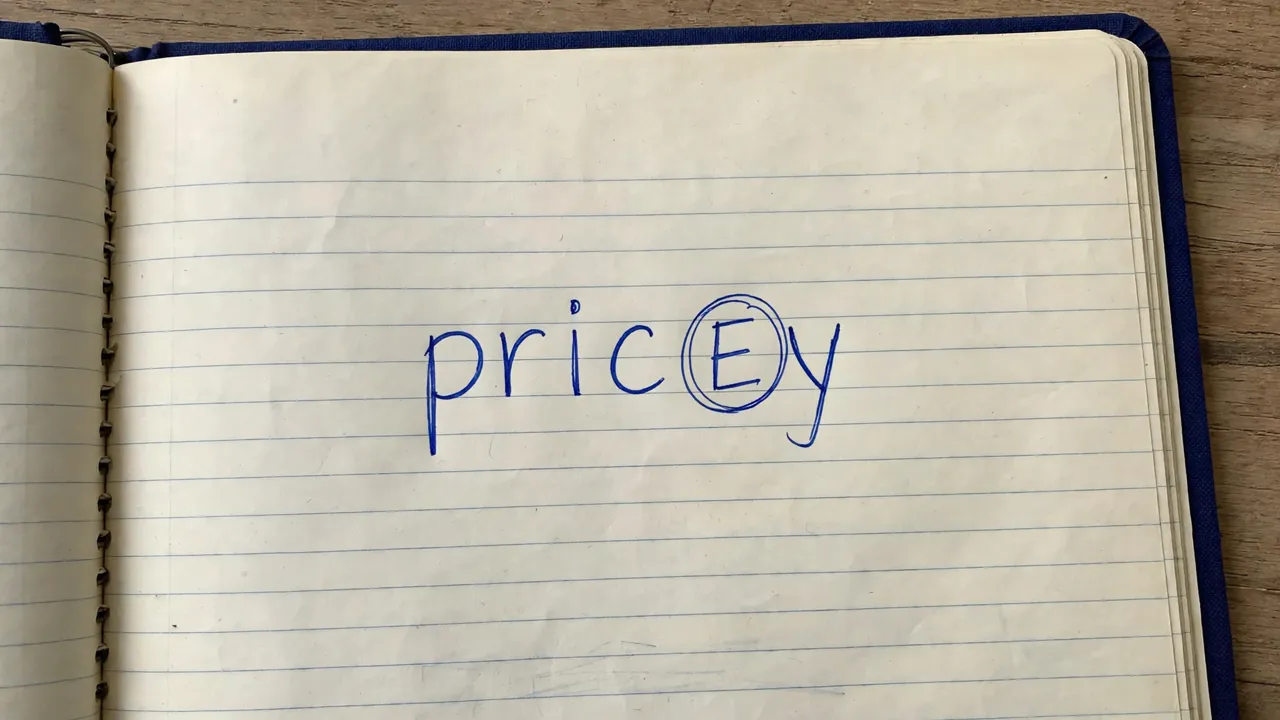
The rule behind "pricey" is one of the most reliable in English spelling: when a word ends in a silent E, keep the E when dropping it would change the sound.
Adding Y to "price" is a perfect example. Dropping the E would turn a soft C into a hard one, so the E stays. The same thing happens in a whole family of everyday words:
- price → pricey. The E keeps the C soft, so the word sounds like "PRY-see".
- price → pricing. Same rule, same reason — "pricing" keeps the E so the C stays soft.
- dice → dicey. A dicey situation is a risky one, and the E stays so the C stays soft, just like in "pricey".
- juice → juicy. A juicy orange keeps its E for the same reason — without it, the C would harden.
Compare that with words where the E really does drop. "Make" becomes "making" because the K sounds the same either way; "hope" becomes "hoping" because the P does not need the E. Dropping the E changes nothing about the sound, so English drops it. With "price", dropping the E changes everything — and that is why the E stays.
This is also why "spicy" trips people up: "spice" becomes "spicy" with the E dropped, an old exception that settled before the rule did. But "pricey" is not an exception — it follows the rule, and every dictionary spells it with the E. Remember: if dropping the E would change the sound, keep the E.
Related Post: No Cap Meaning: The Only Slang Guide You Need in 2026
Correct vs Incorrect: Quick Pairs to Learn From
See the right and wrong versions side by side, and say the correct sentence out loud — hearing it helps it stick.
| Correct | Incorrect |
|---|---|
| "That jacket is too pricey for me." | "That jacket is too pricy for me." |
| "The tickets were pricey, but the show was worth it." | "The tickets were pricy, but the show was worth it." |
| "It is a pricey restaurant, so save it for a special occasion." | "It is a pricy restaurant, so save it for a special occasion." |
| "Everything in that shop is pricey." | "Everything in that shop is pricy." |
| "I love the shoes, but they are a bit pricey." | "I love the shoes, but they are a bit pricy." |
Notice that the meaning never changes — that is why the mistake survives. The difference is correctness. In a text to a friend, nobody will stop you over it. In a job application or a school essay, the wrong spelling is a small slip that makes a reader doubt the rest of your writing.
A Simple Memory Trick
Here is the trick: pricey has a price in it. The whole word "price" sits inside "pricey" — P-R-I-C-E, all five letters, in order, right at the start. If you can spell "price", you can spell "pricey": just add a Y and change nothing else.
Now look at "pricy": the word "price" is not in there. Check yourself by covering the last letter with your thumb. If what is left spells "price", you have got it right. If it spells "pric", something has gone wrong.
Another trick is the sound trick. Say the word slowly — "PRY-see" — and listen to the soft S sound in the middle. That soft sound is the E doing its job. In English, a C sounds soft before E, I, or Y, and hard before A, O, or U. No E, no soft C. No soft C, no "pricey". Use whichever trick clicks until the spelling becomes a reflex.
Examples in Real Life
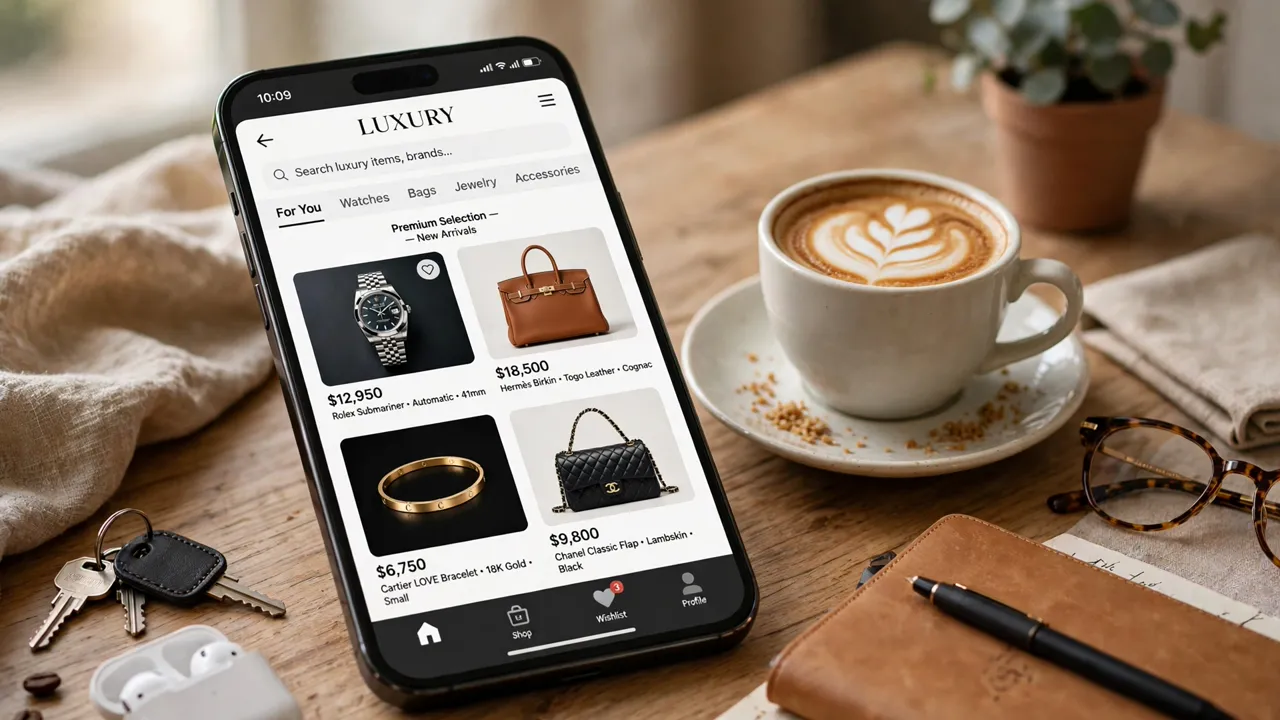
"Pricey" is an everyday word that turns up wherever people talk about money — texts, shopping, reviews, and recommendations.
In text messages, "pricey" is usually a warning or a reaction to a number that made someone blink:
- "The tickets are a bit pricey, but let's just go — it's your birthday."
- "That cafe is pricey for a coffee, though the cake is amazing."
Notice how much work the word does in so few letters. Each message says two things at once: here is the price, and here is how I feel about it. If you look up what FOMO means to keep your messages sharp, the same habit applies here.
When you are shopping, "pricey" is the word you reach for when something costs more than the thing next to it:
- "The organic ones are pricey, but they last twice as long."
- "I wanted the leather version, but it was too pricey, so I got the canvas one."
In reviews, "pricey" is one of the most common words readers search for, because it tells them whether something is worth the money before they buy it:
- "A bit pricey, but the quality is excellent and it has lasted two years."
- "Yes, it's pricey. No, I don't regret it."
"Pricey" does not mean bad. It means expensive, and whether that is a problem depends on what you get for the money. A pricey meal can still be worth it — the word just warns you to check the tag first.
Common Mistakes with Pricey
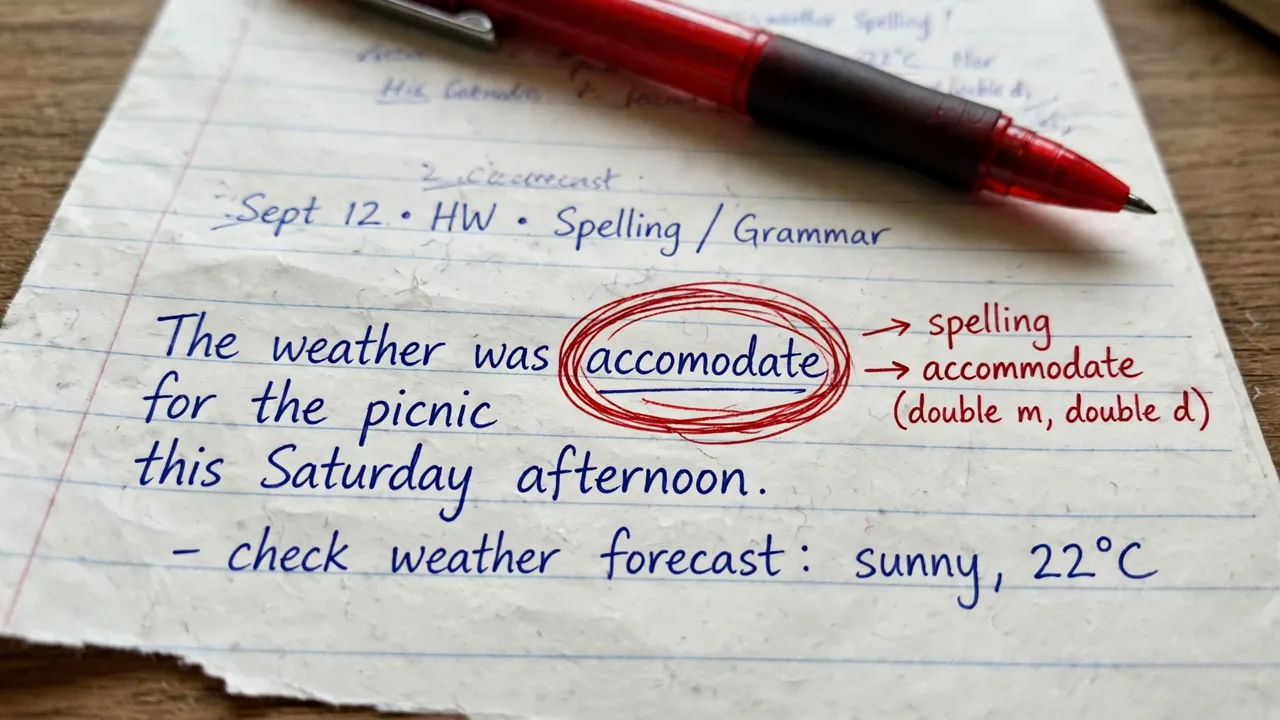
Even people who know the rule slip up. Here are the mistakes to watch for, so you can catch them before anyone else does.
- Writing "pricy" in formal writing. In a text it is harmless, but in an essay, a job application, or a work email it reads as a spelling error. Always use "pricey" in formal contexts.
- Dropping the E because of the "make → making" pattern. The drop-the-E rule is real, but it only applies when dropping the E does not change the sound. With "price", it changes the sound, so the E stays.
- Copying the "spicy" exception. "Spice" becomes "spicy" with the E dropped, which makes "pricy" look right by comparison. It is not — "spicy" is the exception, "pricey" follows the rule.
- Mixing "pricey" up with "priceless". They sound related but mean opposite things. "Pricey" means it costs a lot; "priceless" means it is so valuable you cannot put a price on it. A priceless photo costs nothing; a pricey watch costs a fortune.
If you enjoy untangling everyday confusion, try the guide to what SMH means in text and the disc or disk guide, which settles a spelling question just like this one.
FAQs
Is pricy a word?
No, not in standard English. "Pricy" is a common misspelling of "pricey", not listed in major dictionaries like Oxford, Cambridge, or Merriam-Webster. You will see it in usernames and brand names, but in normal writing always use "pricey".
What is the correct spelling: pricy or pricey?
"Pricey" is correct. It comes from "price", and the E stays when you add the Y because the E keeps the C soft. The same rule gives "pricing" and "dicey".
What does pricey mean?
"Pricey" means expensive, usually more expensive than you expected or more expensive than something seems worth. It is informal, so you will hear it in conversation, texts, and reviews rather than in formal reports. It also carries a small judgement — not just that something costs a lot, but that it might cost too much.
Is pricey formal or slang?
"Pricey" is informal but standard English — fine for everyday writing and speech, just not the most formal documents. Use it in a review, an email to a colleague, or a message to a friend. In a legal contract or an academic paper, "expensive" is safer.
What is the difference between pricey and expensive?
They mean almost the same thing, but "pricey" is informal and adds an opinion. "Expensive" simply states that something costs a lot; "pricey" suggests it costs a lot and maybe too much. A £1,000 laptop can be expensive without being pricey if it is worth every penny — but a £10 coffee is pricey by almost anyone's measure.
Is pricey the same as priceless?
No — they are opposites. "Pricey" means something costs a lot of money. "Priceless" means something is so valuable that no price can be put on it, like a family photograph. A priceless thing usually costs nothing at all, while a pricey thing costs more than you would like.
Conclusion
The answer is simple: "pricey" is correct, spelled with an E, and "pricy" is a misspelling. The whole word "price" sits inside "pricey" — just add a Y. The E stays because it keeps the C soft, the same reason it stays in "pricing", "dicey", and "juicy".
The mistake is so common because it follows a real pattern — plenty of words do drop their E — and because "pricy" sounds exactly like "pricey" out loud. The error only shows when you write it down, which is why it slips past so many people, including autocorrect.
So next time you type fast and that little pause arrives, remember the check: cover the last letter with your thumb. If what is left spells "price", you have got it right. Keep the E, keep the soft C, and carry on.
Related Post: Are There More Doors or Wheels in the World?

Emily here. I write about puns, slang, and the quirky side of language because words are funnier than people give them credit for. Four years in, and I still laugh at my own jokes. Someone has to.
