

You are halfway through a message, typing fast, and you stop. Is it "inbetween" or "in between"? You have seen both versions online, and your phone's autocorrect does not seem sure either. The short answer is this: "in between" — two words — is the correct standard form in almost every situation. "Inbetween" as a single word is not accepted spelling in standard English, even though millions of people type it every day.
That does not mean you will never see "inbetween" in print. You will — in song titles, brand names, usernames, and casual messages. But in essays, work emails, and exams, the two-word form is the one to use. This guide explains why, and gives you a memory trick so you never pause mid-sentence again.
Related Post: What Does ACC Mean?
Quick Answer

"In between" is correct. Write it as two words. "Inbetween" as one word is not standard English.
That is the whole rule in one line. "In between" is a phrase made of the preposition "in" and the word "between". The two words work together to mean "in the middle of two things" or "in the space separating two things".
- Always write "in between" as two words in formal writing, schoolwork, work emails, and published articles.
- "Inbetween" is not listed as a standard word in major dictionaries like Oxford, Cambridge, or Merriam-Webster.
- Your spellchecker will usually flag "inbetween" or quietly split it into two words — trust it on this one.
- The only place "inbetween" is fine is in a proper name, like a song title, a brand, or a username, where the creator chose that spelling on purpose.
What Is "Inbetween"?
"Inbetween" is what happens when two words that are almost always used together start to feel like one word. English is full of words that began as two separate words and slowly fused — "to day" became "today" and "to morrow" became "tomorrow". Your brain sees "in" and "between" side by side so often that it starts treating them as a single unit, and your fingers follow.
The problem is that the fusion has not actually happened yet — at least not in the eyes of dictionaries and style guides. "In between" is still firmly a two-word phrase in standard English. A few dictionaries do list "in-between" with a hyphen as an adjective (as in "an in-between stage"), which adds to the confusion, but the single unhyphenated word "inbetween" has not made the cut.
Here is where you are most likely to see "inbetween" in the wild:
- Song and album titles. Musicians love the one-word look, and a title does not have to follow dictionary spelling.
- Brand names. A shop, blog, or podcast might call itself "InBetween" because it looks cleaner as a logo.
- Usernames and handles. Social media names cannot contain spaces, so "inbetween" is often the only option.
- Casual messages. In a fast text or comment thread, nobody is checking spelling, and the one-word version slips in constantly.
None of those uses makes "inbetween" correct in standard English. A song title is a creative choice, not a grammar rule. In a job application or a school essay, the one-word version will read as a mistake.
What Does "In Between" Mean?
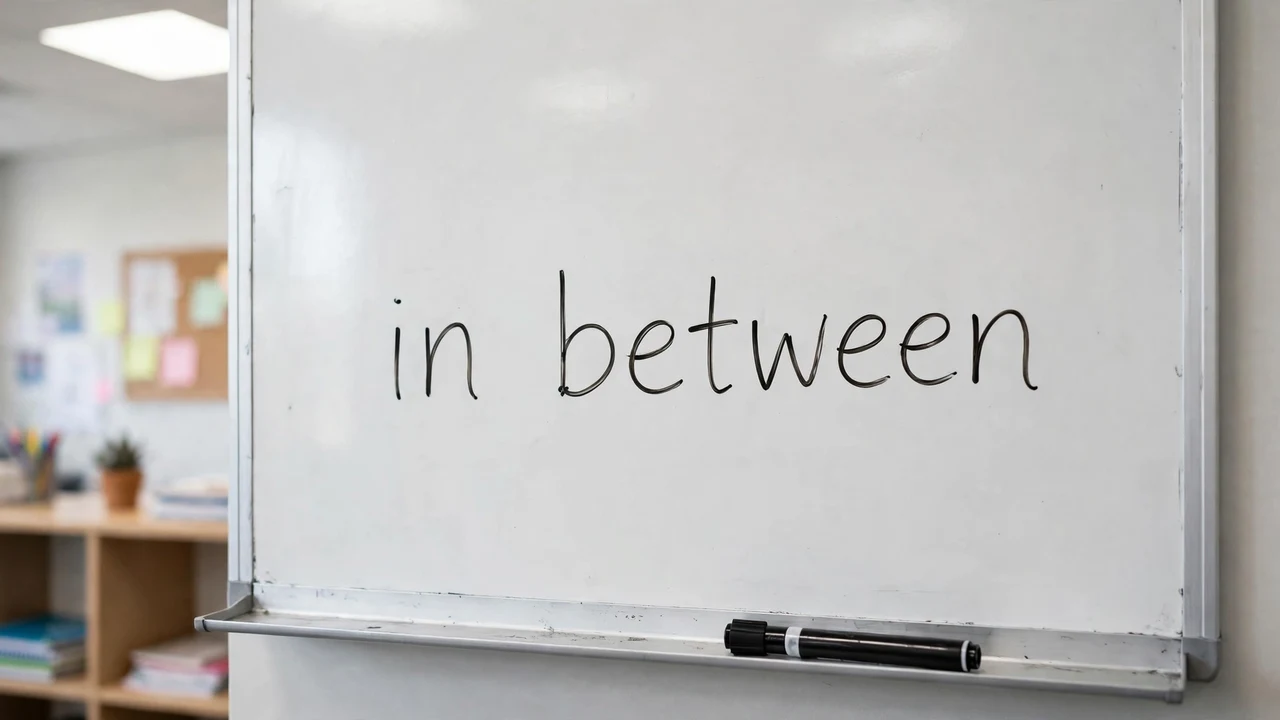
"In between" means in the middle of two things, in the space that separates them, or at a point that is neither one thing nor the other. It can describe a position, a time, or a state that sits between two clear points.
Look at how the meaning shifts slightly depending on what it describes:
- A physical space: "The shop is in between the bank and the bakery." The shop sits in the gap between two buildings.
- A time: "We can meet in between classes." The meeting happens in the gap between one class ending and the next one starting.
- A size or amount: "I am in between sizes — a medium is too tight and a large is too loose." You are neither one size nor the other.
- A stage or phase: "She is in between jobs right now." She has left one job and has not started the next one yet.
The two parts both matter. "In" tells you something is inside a space or a period. "Between" tells you that space is defined by two things on either side.
The Two Forms Compared
The easiest way to keep the two forms straight is to see them side by side. One is standard, one is not, and the difference is a single space.
| Form | Meaning | Example |
|---|---|---|
| in between | In the middle of two things; in the space separating them | "The cafe is in between the library and the park." |
| in-between | (Hyphenated adjective) neither one thing nor the other, describing a noun | "It was an in-between stage in her career." |
| inbetween | Not standard English; appears in titles, brands, and casual typing | "Inbetween (song title) — a creative spelling, not a rule." |
Read that table again and notice what is missing: there is no row where "inbetween" is the right choice in normal writing. It is not that the one-word form means something different — it means exactly the same thing. It is simply not the accepted spelling. Writing "inbetween" in a formal sentence is like writing "alot" instead of "a lot" or "incase" instead of "in case". Your reader will understand you perfectly, and they will also quietly mark you down for it.
The hyphenated form deserves a little extra attention. "An in-between colour" is right, and so is "the colour is in between blue and green" — but with no hyphen, because there the phrase is doing a different job. The test is simple: right before a noun, use the hyphen; after the verb, use two plain words.
Related Post: What Does BFFR Mean?
When Should You Use Each Form?
Most of the time, use "in between". Here are the situations where each form shows up.
Use "in between" (two words, no hyphen) when:
- You are describing a position. "Sit in between your brother and your sister." "The key is in between the cushions."
- You are describing a time. "Call me in between meetings." "We have a free hour in between lectures."
- You are describing a middle state. "I am in between sizes." "He is in between careers at the moment."
- You are writing anything formal. Essays, exams, job applications, cover letters, reports, and professional emails all take the two-word form.
Use "in-between" (with a hyphen) when:
- It comes directly before a noun it describes. "An in-between stage", "an in-between size", "an in-between shade of blue".
"Inbetween" (one word, no hyphen) is only acceptable when:
- It is part of a proper name. A song title, a brand name, a book title, or a username that was created that way on purpose.
- You are typing casually and do not care. In a quick text to a friend, nobody will mind — but it is still worth building the two-word habit.
One more habit worth building: when you catch yourself typing "inbetween", say the two words separately in your head — "in… between" — and notice the little pause between them. That pause is the space your fingers need to type. After a week of doing it deliberately, the two-word version becomes automatic.
Correct vs Incorrect: Quick Pairs to Learn From
The fastest way to learn a spelling rule is to see the right and wrong versions next to each other. Read each pair below and say the correct one out loud — hearing it helps it stick.
| Correct | Incorrect |
|---|---|
| "Meet me in between the two buildings." | "Meet me inbetween the two buildings." |
| "She is in between jobs right now." | "She is inbetween jobs right now." |
| "The answer lies in between yes and no." | "The answer lies inbetween yes and no." |
| "We have ten minutes in between classes." | "We have ten minutes inbetween classes." |
| "It is an in-between colour, not quite green." | "It is an inbetween colour, not quite green." |
Look closely at the last pair. "An in-between colour" is correct because the hyphenated form sits before the noun "colour" and describes it. The one-word "inbetween" is wrong there for the same reason it is wrong everywhere else — it is not a standard word.
A Simple Memory Trick
Picture two friends standing on either side of you. "In" is one friend, "between" is the other, and you are standing in the middle — in between them. The space between the two friends is the whole point of the phrase, so it makes sense that there is a space between the two words as well. The space in the middle is the space in the spelling.
Another trick that works for a lot of people is the counting trick: "in between" is two words because it describes two things. There are two sides, two buildings, two jobs, two sizes — and two words to match them. Keep whichever trick clicks for you and use it every time until the spelling becomes a reflex.
Examples in Real Life: Emails, Texts, and Social Posts
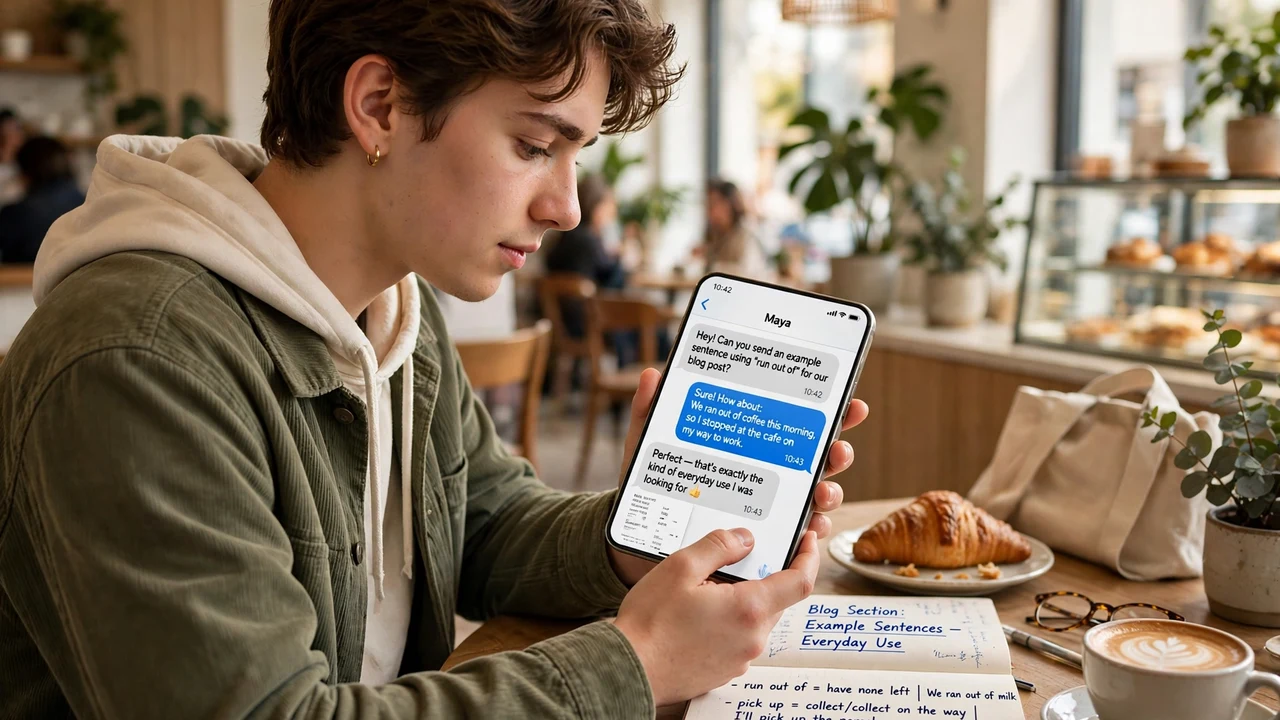
Here is the phrase doing its normal job in the places you actually write.
In text messages, "in between" shows up constantly, usually when someone is squeezed for time or stuck between two options:
- "Can we talk in between classes? I have ten minutes free."
- "I am in between sizes in this brand, so order a large for me."
- "Meet me in between the cafe and the library, I will be the one with the red bag."
Notice how natural the two-word form looks in a chat bubble. If you wrote "inbetween" in any of those messages, your friend would still understand you — but the message would look a little less polished. And if you are the kind of person who reads up on what NGL means in texting to keep your messages sharp, the same habit applies here: small details add up.
In emails, the phrase is a workhorse for scheduling and for describing a middle state:
- "I am free in between 2 and 4 this afternoon — does that work for you?"
- "She is currently in between roles, so please direct any questions to me for now."
In a professional email, spelling matters more than it does in a chat, because the reader is judging your attention to detail. A hiring manager who spots "inbetween" in a cover letter may not reject you for it, but it is the kind of small slip that adds up with others. Two words, every time, in every work email.
Common Mistakes with Inbetween
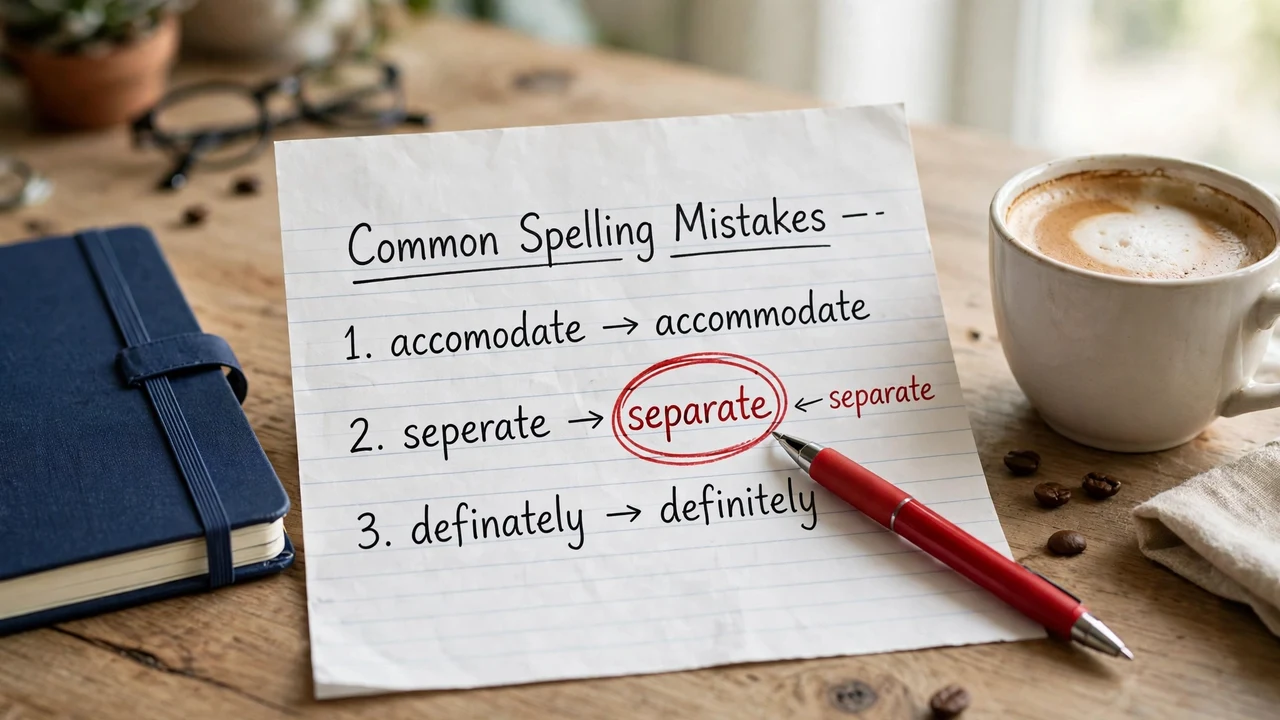
Even people who know the rule slip up, usually for the same few reasons. Here are the mistakes to watch for, so you can catch them in your own writing before anyone else does.
- Writing "inbetween" in formal writing. In a text it is harmless, but in an essay, a job application, or a work email it reads as a spelling error. Always split it in formal contexts.
- Hyphenating when you should not. "The shop is in-between the bank and the bakery" is wrong. The hyphen only belongs in the adjective form before a noun. After a verb, use two plain words.
- Dropping the hyphen when you need it. "An in between stage" looks sloppy. When the phrase describes a noun directly, join it with a hyphen: "an in-between stage".
- Confusing "in between" with "between". "Between the two buildings" works on its own; "in between the two buildings" adds the sense of being inside the gap. Both are correct — just do not write "inbetween" for either of them.
- Trusting autocorrect too much. Some keyboards have learned "inbetween" from their users and will happily suggest it. Autocorrect learns from what people type, not from what is correct.
If you enjoy untangling this kind of everyday confusion, you will like the guide to what FOMO means — another phrase people use every day without stopping to check what it actually means — and the No Cap meaning guide for a slang phrase that causes just as much head-scratching. You can also find out what TTYL means while you are here.
FAQs
Is "inbetween" a word?
Not in standard English. Major dictionaries do not list "inbetween" as a word, and style guides treat it as a misspelling. It appears in song titles, brand names, and usernames, where creative spelling is allowed, but in normal writing always use "in between" as two words.
What is the correct spelling: inbetween or in between?
"In between" is correct. Write it as two separate words in almost every situation. The only related correct form is "in-between" with a hyphen, which works as an adjective directly before a noun, as in "an in-between stage".
When do you use a hyphen in "in-between"?
Use the hyphen when the phrase comes directly before a noun and describes it, for example "an in-between size" or "an in-between colour". Do not use a hyphen when the phrase comes after a verb, for example "the shop is in between the bank and the bakery".
What does "in between" mean?
It means in the middle of two things, or in the space or time that separates them. It can describe a physical position ("in between the two buildings"), a time ("in between classes"), a size ("in between sizes"), or a state ("in between jobs").
Can I use "inbetween" in a text message?
You can — your friends will understand you, and nobody proofreads a text the way they proofread an essay. But it is still a misspelling, and building the two-word habit in casual writing makes it automatic in formal writing, where it matters.
Related Post: What Does SMH Mean In Text?
Conclusion
The answer is simple, and it is worth remembering: "in between" is correct, written as two words. "Inbetween" is not standard English, even though you will see it in song titles, brand names, usernames, and plenty of casual messages. The hyphenated form "in-between" is correct too, but only as an adjective directly before a noun — "an in-between stage", never "the stage is in-between".
The mistake is so common because the phrase sounds like one word when you speak it, so your fingers write one word when you type it. Remember the space in the middle — two things, two words, one space between them.
So the next time you are typing fast and that little pause arrives, you know what to do. Add the space, keep the two words apart, and carry on with your sentence. It is a tiny detail, but tiny details are what make writing look polished.

Emily here. I write about puns, slang, and the quirky side of language because words are funnier than people give them credit for. Four years in, and I still laugh at my own jokes. Someone has to.
