

When I see the letters TM next to a brand name, product name, logo, or slogan, I usually understand that the owner is claiming that name or phrase as a trademark. But what does TM mean exactly, and why do businesses put it next to their names?
TM means “trademark.” It is commonly used to show that a person or business is claiming a word, phrase, logo, symbol, or other branding element as a trademark. You may see it written as TM or displayed as the small symbol ™.
For example, a business might use a name such as “BrightHome™” on its website, packaging, advertisements, or products. The TM symbol tells people that the business considers “BrightHome” to be a trademark associated with its goods or services.
One important point is that the TM symbol does not necessarily mean the trademark has been officially registered with a government trademark office. A business can generally use TM to indicate its claim even when the mark is not registered.
This is different from the ® symbol, which means a trademark has been registered. Understanding this difference is useful because TM and ® are not simply two versions of the same symbol.
What Does TM Mean?
TM means “trademark.” It is used by businesses and individuals to identify a word, name, phrase, logo, design, or other branding element that they claim as a trademark.
A trademark helps people recognize the source of goods or services. For example, when I see a familiar brand name on a product, I may immediately associate that name with a particular company and its products.
The TM symbol can be placed after a trademark, usually in a small raised position.
For example:
FreshNest™
UrbanGear™
SmartBake™
Mountain Trail™
The symbol communicates a simple message: “We are using this name or branding element as a trademark.”
TM is especially common with new businesses, new product names, slogans, and brands that have not completed trademark registration.
It is important to knowing that the exact legal rights connected to using a trademark can vary depending on the country and the circumstances. Trademark laws are not identical everywhere.
What Is a Trademark?
A trademark is a sign that helps distinguish one business’s goods or services from those of another business.
A trademark can take different forms. It may be a business name, product name, slogan, logo, symbol, or another recognizable branding element.
For example, imagine I start a company that sells reusable water bottles. I call the company “ClearPeak.” If I use ClearPeak™ as a brand name for my products, I am identifying that name as a trademark.
The purpose of a trademark is not simply to make a name look official. It helps identify the source of goods or services.
Think about how people recognize brands when shopping. A name, logo, or slogan can help a customer decide which product belongs to a particular company.
Trademarks can therefore be an important part of a company’s identity.
A trademark is different from copyright and patents. Copyright generally protects original creative works, while patents protect certain inventions and technical developments. Trademarks mainly deal with brand identification.
What Does the ™ Symbol Mean?
The ™ symbol means trademark.
When a business places ™ next to a name or phrase, it is telling the public that it is using that name, phrase, or branding element as a trademark.
For example:
Green Valley™
The symbol itself does not automatically prove that a government trademark office has registered the mark.
This is one of the most important things to remember when asking, “What does TM mean?”
The symbol is often used when a business wants to establish or communicate a trademark claim without saying that the mark has been officially registered.
I often think of ™ as a notice to other people. It communicates that the owner considers the particular branding element to be a trademark.
The legal effect of that notice can depend on local law, so simply seeing ™ does not tell you everything about the owner’s legal rights.
Does TM Mean the Trademark Is Registered?
No. TM does not necessarily mean that the trademark is registered.
This is a common misunderstanding.
A business can use the ™ symbol for a trademark that has not been registered. In many cases, businesses use the symbol while they are building a brand or before they complete a formal registration process.
For example, suppose a company creates a new product called “QuickClean.” It may use:
QuickClean™
This indicates that the company is treating the name as a trademark.
If the trademark later becomes officially registered, the company may be able to use:
QuickClean®
However, registration rules and trademark rights depend on the applicable country’s laws.
The distinction is important because ™ and ® communicate different things.
What Does ® Mean?
The ® symbol means “registered trademark.”
It is used to indicate that a trademark has been officially registered with the relevant trademark authority.
For example:
ExampleBrand®
The ® symbol is therefore different from ™.
A simple way I remember the difference is:
™ = trademark claim
® = registered trademark
A person should not assume that a company can use ® simply because it considers its name to be a trademark. In many jurisdictions, the ® symbol is reserved for marks that have actually been registered.
Using a registration symbol incorrectly can create legal problems in some countries.
That is why businesses should understand the rules that apply in their jurisdiction before using ®.
Related Post: What Does GL Mean in Text:
TM vs. ®: What Is the Difference?
The difference between TM and ® is mainly connected to trademark registration.
| Symbol | Meaning | Registration |
| ™ | Trademark | Does not necessarily mean registered |
| ® | Registered trademark | Indicates official registration |
For example, a company with a new brand may write:
BrightPath™
If the mark is later officially registered, it may use:
BrightPath®
The symbols provide different information to customers, competitors, and other businesses.
I would not treat TM as proof that a trademark application has been filed or approved. The symbol alone does not tell me the full legal status of a mark.
Likewise, seeing ® generally tells me that the owner is presenting the mark as registered, but I would still need to check the relevant trademark records if I needed to confirm registration details.
Why Do Businesses Use the TM Symbol?
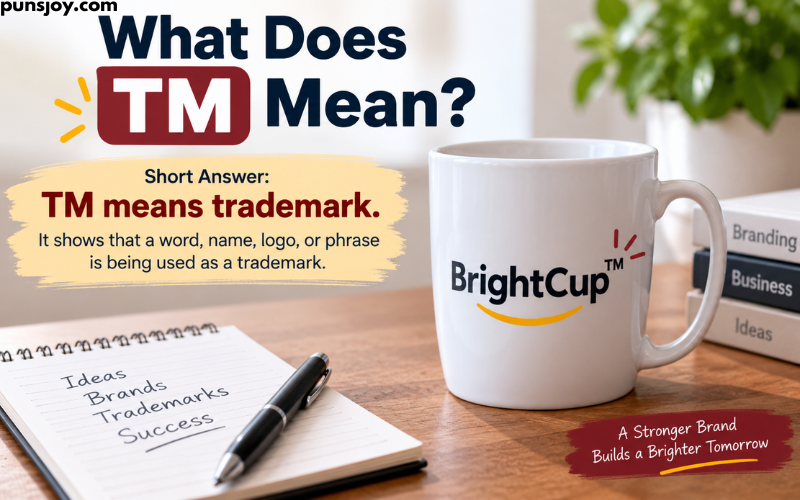
Businesses use TM for several reasons.
One reason is to clearly identify their branding as a trademark. A business may want customers and competitors to know that a particular name, phrase, or logo is being used as a source identifier.
Another reason is brand awareness. When people repeatedly see a name followed by ™, they may begin to associate that name with a particular business.
The symbol can also serve as a notice to others that the company considers the branding important and does not want it treated as an ordinary word or phrase.
For a new company, the TM symbol can be especially useful when establishing a new brand identity.
For example, a business launching a new product might use:
HomeFresh™
The symbol can appear on product packaging, websites, advertisements, social media pages, and other marketing materials.
However, the symbol does not replace proper trademark research or registration where registration is appropriate.
Where Is TM Used?
The TM symbol can appear in many places where a brand is displayed.
You may see it on:
- Product packaging
- Websites
- Business cards
- Advertisements
- Product labels
- Social media pages
- Store signs
- Marketing materials
- Company documents
- Product names
- Brand logos
- Slogans
For example, a company might display its brand as NatureHome™ on its website and packaging.
The symbol is often placed immediately after the trademark and appears smaller than the main text.
It can also be used with a slogan.
For example:
Better Living Every Day™
The exact placement and presentation can vary depending on the company’s branding style.
Can TM Be Used With a Logo?
Yes, the TM symbol can be associated with a logo when the logo is being used as a trademark.
A logo can function as a trademark when it helps customers identify the source of goods or services.
For example, a company might have a unique graphic logo representing its business. If the company is claiming that logo as a trademark, it may use ™ with it.
The same basic idea applies to a word mark, product name, or slogan.
However, whether a particular logo qualifies for trademark protection depends on the relevant law and facts.
Simply placing ™ next to a logo does not automatically give the logo every possible form of legal protection.
Can TM Be Used With a Business Name?
Yes, a business may use ™ with a business name when it is treating that name as a trademark.
For example:
BlueStone™
This can indicate that the name is being used as a brand identifier.
But there is an important difference between a business name and a trademark.
A business may register its company name with a government agency for business purposes without that registration automatically creating trademark rights for every use of the name.
Trademark protection generally focuses on how a mark is used to identify goods or services.
Because business registration and trademark registration are different legal processes, I would not assume that registering a company name automatically registers it as a trademark.
Can TM Be Used With a Product Name?
Yes. Product names are commonly used as trademarks.
Imagine a company sells a cleaning product called “SparkPro.”
The company might display:
SparkPro™
This tells customers that the company is using SparkPro as a trademark.
A product name can become an important part of a company’s brand identity. Customers may recognize the name and connect it with a particular company.
Before adopting a new product name, businesses should also check whether another company already has trademark rights that could create a conflict.
This is an important step because choosing a name that is too similar to an existing trademark can cause legal and business problems.
Can TM Be Used With a Slogan?
Yes. A slogan can sometimes function as a trademark when it identifies the source of goods or services.
For example, a company might use a slogan such as:
Made for Everyday Life™
The company may use ™ to indicate that it considers the slogan a trademark.
Not every advertising phrase automatically receives trademark protection. The legal strength of a slogan can depend on factors such as how it is used, whether it identifies a particular source, and the laws that apply.
This is why I would not assume that adding ™ to any sentence automatically turns it into a legally protected trademark.
Is TM the Same as Copyright?
No. TM and copyright are different forms of intellectual property protection.
A trademark generally helps identify the source of goods or services.
Copyright generally protects original creative expression, such as writing, photographs, music, artwork, videos, and certain other creative works.
For example, a business name may be used as a trademark, while a photograph created for that business may be protected by copyright.
These protections can exist at the same time, but they serve different purposes.
This distinction matters because people sometimes use the terms trademark and copyright as though they mean the same thing.
They do not.
Is TM the Same as a Patent?
No. A patent and a trademark have different purposes.
A patent can protect certain inventions and technical developments when the legal requirements are met.
A trademark identifies and distinguishes the source of goods or services.
For example, if a company creates a new type of machine, the invention might potentially be covered by patent protection if it meets the applicable requirements. The name used to sell that machine could potentially function as a trademark.
The same business can therefore have patents and trademarks, but they protect different things.
Does Using TM Give Automatic Trademark Protection?
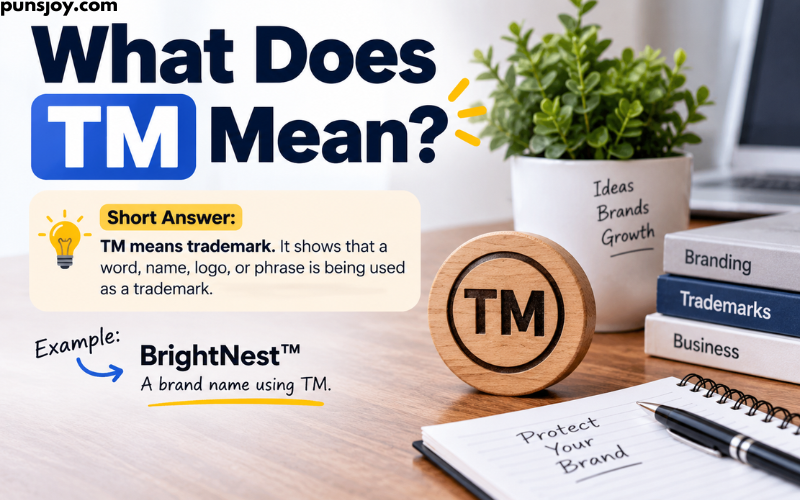
Using ™ does not automatically provide the same protection as trademark registration.
In some countries, trademark rights can arise from actual use of a mark, while registration can provide additional or stronger legal benefits. The exact rules vary significantly by jurisdiction.
This means I would not rely on the TM symbol alone when deciding whether a brand is legally protected.
Businesses that are serious about protecting a brand should consider the trademark laws where they operate and where they plan to sell their products or services.
A trademark professional or qualified legal adviser can help with questions involving searches, applications, registration, infringement, and enforcement.
When Should a Business Use TM?
A business may use ™ when it is claiming a word, phrase, logo, symbol, or other branding element as a trademark.
For example, if a company has created a new brand name and is using it to identify its products, it may choose to display ™.
There is no universal rule that every business must use the symbol every time it displays its trademark.
Some businesses use it prominently when launching a brand and use it less often later. Others may use it consistently in particular marketing materials.
The important point is that the business should understand what the symbol communicates and follow the rules that apply in its country.
When Should a Business Use ®?
The ® symbol is generally used after a trademark has been officially registered.
A business should not casually use ® simply because it likes a name or has started using ™.
If a trademark is registered in one country but not another, the rules concerning use of ® can also differ depending on the jurisdiction.
For this reason, international businesses need to be especially careful.
A company selling products in several countries may have different trademark registrations and rights in each market.
What Does TM Mean on Social Media?
When I see ™ next to a username, brand name, product name, or slogan on social media, it generally means the owner is presenting that term as a trademark.
For example:
TravelNest™
A business may use the symbol on Instagram, Facebook, X, TikTok, YouTube, or another platform to maintain consistent branding.
However, social media platforms do not determine whether a trademark is legally valid simply because someone places ™ beside a name.
The symbol is a branding and trademark notice. The underlying legal rights depend on trademark law.
This is especially important when a business is choosing a social media name that resembles another company’s established brand.
What Does TM Mean in Texting?
The meaning of TM can change depending on the context.
When TM appears next to a brand name or slogan, it usually means trademark.
But in text messages and online conversations, people sometimes use “TM” as an abbreviation for completely different phrases.
For example, depending on the conversation, TM might mean something such as “tomorrow” or another phrase.
So I always look at the surrounding words before deciding what TM means.
If I see:
CoolTech™
the meaning is almost certainly trademark.
If someone writes:
I’ll call you TM
the person may be using TM as an informal abbreviation for “tomorrow.”
Context matters.
What Does TM Mean in Business?
In business, TM usually refers to a trademark.
Businesses use trademarks to distinguish their goods or services from those offered by other businesses.
A strong brand name can become one of a company’s valuable assets. Customers may recognize the name and connect it with a particular level of quality, service, or experience.
For that reason, businesses often pay close attention to trademark availability and protection.
When I see TM in a business setting, I generally understand it as a notice that a particular name, phrase, logo, or other branding element is being claimed as a trademark.
It does not, by itself, tell me whether the mark is registered.
What Does TM Mean After a Brand Name?
When ™ appears immediately after a brand name, it generally means the business is identifying that name as a trademark.
For example:
FreshWorld™
The company is using “FreshWorld” as a brand identifier and is presenting it as a trademark.
The placement of the symbol does not necessarily mean that the trademark has been registered.
If you see:
FreshWorld®
the ® symbol indicates that the mark is being presented as a registered trademark.
This small difference can have an important legal meaning.
What Does TM Mean on Products?
A TM symbol on a product usually indicates that the company considers the nearby name, phrase, logo, or other branding element to be a trademark.
For example, a product package might say:
CleanMax™
The symbol is connected to the brand rather than the physical product itself.
This means TM does not usually tell you anything about the product’s size, quality, ingredients, materials, or safety. It is primarily related to branding and trademark identification.
If you are looking at a product label, the TM symbol is simply one part of the company’s branding and legal notices.
Common Misunderstandings About TM
There are several common misunderstandings about the TM symbol.
The first is thinking that ™ means the trademark is registered. It does not necessarily mean that.
The second is assuming that using ™ guarantees complete legal protection. It does not.
The third is believing that TM and copyright are the same thing. They are not.
Another misunderstanding is thinking that putting ™ after any word automatically gives someone ownership of that word in every situation.
Trademark rights are more complicated than that.
A trademark’s strength can depend on how it is used, the goods or services connected with it, the geographic area involved, and other legal factors.
This is why I would treat the TM symbol as a notice of trademark use rather than a complete statement of legal ownership.
How Do I Type the TM Symbol?
The trademark symbol is:
™
If you need to copy it, you can copy this symbol directly: ™
On many devices and operating systems, there are also keyboard shortcuts or character menus that can be used to insert special symbols.
The exact method depends on whether you are using Windows, Mac, Android, iPhone, or another device.
If you are writing website content, product descriptions, or marketing material, you can also insert the symbol through your website editor if it supports special characters.
Why Is TM Written in Small Letters?
The ™ symbol is normally displayed in a small raised format because it acts as a notice rather than the main part of the brand name.
For example:
BrightHome™
The brand name remains the focus, while ™ provides additional information.
The symbol is usually positioned near the upper-right side of the name, although exact placement can vary depending on the design.
There is no need to make the trademark symbol as large as the brand name.
Can I Use TM Without Registering a Trademark?
In many jurisdictions, ™ can be used to indicate a claimed trademark even when the mark has not been registered.
However, trademark laws differ by country, and the legal consequences of using a mark depend on the circumstances.
I would therefore separate two questions:
Can I use ™ to indicate a trademark claim?
and
What legal rights do I actually have?
Those are not always the same question.
Using the symbol does not replace a trademark search, application, registration, or legal advice.
Does TM Mean Someone Owns the Word?
Not necessarily in the broad sense.
Trademark rights are generally connected to particular uses of a mark and particular goods or services.
For example, a word may be used as a trademark by one company for a specific type of product while the same word has an ordinary meaning in everyday language.
A trademark does not usually mean that nobody else can ever say or write the word.
The legal question can depend on how the word is being used and whether that use creates the type of conflict covered by trademark law.
This is one reason trademark law can be more complicated than simply asking who “owns” a word.
FAQs
What does TM stand for?
TM stands for trademark. It is used to indicate that a word, phrase, logo, symbol, product name, or other branding element is being claimed or used as a trademark.
Does TM mean registered trademark?
No. TM does not necessarily mean that a trademark is registered. The ® symbol is generally used to indicate a registered trademark.
What is the difference between TM and R?
TM means trademark and is commonly used for an unregistered trademark claim. The ® symbol means registered trademark and is generally reserved for officially registered marks.
Can anyone use the TM symbol?
Trademark rules vary by country, but ™ is commonly used to indicate a claimed trademark even when the mark is not registered. Businesses should still understand the laws that apply to their situation.
What does ™ mean after a company name?
It usually means the company is presenting that name as a trademark. It does not necessarily mean that the name has been officially registered as a trademark.
What does TM mean on a product?
It generally indicates that the nearby brand name, logo, slogan, or other branding element is being used as a trademark. It does not describe the product itself.
Can I use TM before registering a trademark?
In many places, businesses use ™ before registration to identify a trademark claim. The exact legal rules vary by jurisdiction.
Does TM protect my brand?
Using ™ can communicate a trademark claim, but the symbol itself does not provide all the benefits associated with trademark registration. The available legal protection depends on the applicable law and circumstances.
Is TM the same as copyright?
No. Trademark and copyright protect different types of intellectual property. Trademark law generally focuses on brand identification, while copyright generally protects original creative expression.
Is TM the same as a patent?
No. Patents and trademarks serve different purposes. A patent can protect certain inventions, while a trademark identifies the source of goods or services.
What does TM mean in a text message?
The meaning depends on context. When TM appears next to a brand or logo, it usually means trademark. In casual texting, TM can have other meanings.
Can TM be used with a slogan?
Yes, a slogan can sometimes be used as a trademark if it functions as a source identifier. Whether it qualifies for trademark protection depends on the circumstances and applicable law.
Conclusion
So, what does TM mean?
TM means “trademark.” It is used to show that a person or business is treating a name, word, phrase, logo, slogan, symbol, or other branding element as a trademark.
The most important thing to remember is that ™ does not necessarily mean the trademark is officially registered. The ® symbol is used to indicate a registered trademark.
I find the easiest way to remember the difference is to think of ™ as a trademark notice and ® as a registration notice.
If you see BrandName™, the business is identifying the name as a trademark. If you see BrandName®, the business is indicating that the mark is registered.
Trademark rules can vary from one country to another, so the symbols should not be treated as a complete explanation of someone’s legal rights. If you are creating a business, choosing a brand name, or trying to protect an existing trademark, checking the applicable trademark rules and official records is a sensible step.
For everyday use, however, the simple answer is clear: TM stands for trademark and is used to identify branding that someone claims or uses as a trademark.

Emily here. I write about puns, slang, and the quirky side of language because words are funnier than people give them credit for. Four years in, and I still laugh at my own jokes. Someone has to.
