

If you have seen DND on your phone, in a text message, on social media, or in a gaming conversation, you may have wondered, “What does DND mean?” The meaning depends on where you see it, but the most common meaning is “Do Not Disturb.” On phones and other devices, DND is a setting that reduces or stops notifications, calls, alerts, and other interruptions for a period of time.
DND can also have other meanings. In gaming, DND often refers to Dungeons & Dragons, the popular tabletop role-playing game. In texting, someone may write “DND” to tell others that they do not want to be disturbed. On a smartphone, DND usually refers to the Do Not Disturb feature.
In this guide, I’ll explain what DND means, where the term is used, how Do Not Disturb works, what happens when you turn it on, and how it differs from silent mode, airplane mode, and blocking. I’ll also explain what DND means in texting and social media, along with the meaning of DND in gaming.
What Does DND Mean?
DND most commonly means Do Not Disturb. It is used to indicate that someone does not want interruptions at a particular time.
For example, if I put my phone on DND while I am working, my phone may stop making sounds or showing normal notification alerts. Depending on my settings, calls and messages can still arrive, but I may not receive an obvious alert for each one.
The phrase can be used both as a feature and as a general message. A phone may have a “Do Not Disturb” mode, while a person might simply text “DND” to mean, “Please do not disturb me right now.”
DND does not always mean that the device is disconnected from the internet. It usually changes how notifications and calls are presented rather than turning off the phone’s communication functions.
What Does DND Stand For?
DND stands for Do Not Disturb when it is being used in the context of phones, computers, messaging, or personal communication.
The words are straightforward:
- Do means an action.
- Not indicates that the action should not happen.
- Disturb means to interrupt or bother someone.
Together, “Do Not Disturb” tells other people, apps, or devices that interruptions should be limited.
I often think of DND as a digital version of putting a “Please Do Not Disturb” sign on a door. The difference is that a phone can apply the rule automatically to calls, notifications, and alerts.
What Does DND Mean on a Phone?
On a phone, DND usually means Do Not Disturb mode. It is designed to reduce interruptions from notifications, phone calls, messages, and other alerts.
When DND is enabled, the exact behavior depends on the phone and the settings selected. Some phones can silence almost every alert, while others allow specific people or apps to get through.
For example, I could configure DND so that:
- Most notifications remain silent.
- Calls from selected contacts can still ring.
- Repeated calls can be allowed through.
- Alarms can continue to sound.
- DND automatically turns on at certain times.
- Specific apps can be allowed to send alerts.
This makes DND more flexible than simply turning down the volume.
A person might use DND while sleeping, studying, working, driving, watching a movie, attending a meeting, or spending time with family.
What Happens When You Turn On DND?
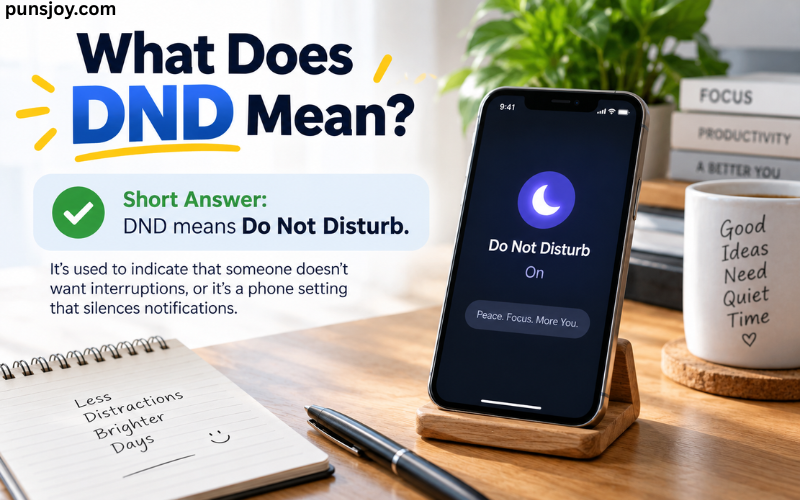
Turning on DND does not necessarily turn off your phone. Your phone can continue receiving messages, emails, app notifications, and calls.
Instead, DND controls how those interruptions reach you.
For example, suppose someone sends me a message while DND is active. The message can still arrive normally. However, my phone may not play a notification sound or vibrate immediately. When I check my phone later, I can see the message.
The exact behavior depends on the device and configuration.
Some DND settings can also hide notification previews or prevent notifications from appearing prominently on the lock screen. Other settings allow certain notifications to remain visible.
This is why I recommend checking the DND settings rather than assuming that the feature works the same way on every device.
What Does DND Mean in Texting?
In texting, DND usually means Do Not Disturb.
If someone sends “DND” in a conversation, they may be telling you that they are busy and do not want to be interrupted. It can be a short way of saying:
“I’m busy right now.”
“Please don’t call me.”
“I need some quiet time.”
“I’ll respond later.”
For example, someone might text, “DND for the next two hours.” This means they do not want to be disturbed during that period.
The tone depends on the person and the situation. DND is not automatically rude. It can simply be a quick way to communicate a boundary.
If someone says “DND” without explaining why, I would normally avoid assuming that something is wrong. They may simply be working, sleeping, studying, or taking a break from their phone.
What Does DND Mean on iPhone?
On an iPhone, DND refers to the Do Not Disturb option within Apple’s Focus features.
When it is active, the iPhone can reduce interruptions from calls, messages, and notifications. Users can customize who and which apps are allowed to notify them.
For example, I might use DND during the night but allow calls from family members. I could also create a schedule so that DND turns on automatically at a certain time.
The feature is useful because it gives me more control than simply putting the phone on silent.
Depending on the iPhone settings, DND can also work across Apple’s devices through Focus settings. This can help maintain the same notification preference across compatible devices.
What Does DND Mean on Android?
On Android phones, DND generally means Do Not Disturb as well.
Android devices allow users to control which calls, messages, apps, and alerts can interrupt them. However, the exact menus and options can vary between manufacturers and Android versions.
For example, one Android phone may provide detailed controls for individual apps, while another may organize these options differently.
I can normally use DND to create a quiet period without completely disconnecting my phone. This is especially useful when I still want important calls or alarms to reach me.
If you use an Android phone, the easiest way to knowing your particular DND options is to open the phone’s notification or sound settings and look for “Do Not Disturb.”
DND vs Silent Mode
DND and silent mode are similar, but they are not exactly the same.
Silent mode generally turns off or reduces sounds from calls and notifications. Depending on the device, the phone may still vibrate and display alerts normally.
DND provides more control over which interruptions are allowed.
For example, I might use silent mode when I am sitting in a quiet place and simply do not want my phone making noise. I might use DND when I want a longer period with fewer interruptions and want to decide which people or apps can still reach me.
A simple way to remember the difference is:
Silent mode controls sound. DND controls interruptions.
Modern phones can make these features overlap, so the exact behavior depends on the device.
DND vs Airplane Mode
DND and airplane mode serve completely different purposes.
DND is designed to limit interruptions while allowing the phone to continue functioning normally.
Airplane mode is designed to disable wireless communication features such as cellular connections and, depending on the device and settings, Wi-Fi and Bluetooth.
If I turn on DND, I can generally continue browsing the internet, using apps, receiving data, and communicating normally. I simply receive fewer alerts.
If I turn on airplane mode, communication connections may be disabled.
So if I want peace and quiet but still want my phone connected, DND is usually the better option.
DND vs Blocking Someone
DND should not be confused with blocking.
When I block someone, I am specifically preventing or restricting communication from that person. Blocking is directed at an individual contact, phone number, or account.
DND usually affects notifications more broadly.
For example, if I put my phone on DND, a friend’s message may still arrive. I simply may not be alerted immediately.
If I block that friend, their communication may be prevented from reaching me depending on the service.
This difference is important because DND is usually temporary and focused on reducing interruptions, while blocking is generally used to prevent unwanted communication from a particular source.
Why Do People Use DND?
People use DND for many everyday reasons.
Sleeping
A phone can produce alerts throughout the night. DND can create a quieter environment and reduce unnecessary interruptions while sleeping.
Many people still allow alarms and selected emergency contacts to reach them.
Working
When I need to focus on an important task, frequent notifications can break my concentration. DND can reduce these interruptions without requiring me to shut off my phone.
Studying
Students may use DND while reading, writing, or preparing for an exam. A quiet phone can make it easier to stay focused.
Meetings
DND can help prevent a phone from ringing or producing distracting alerts during a meeting.
Driving
Reducing phone interruptions can help keep attention away from unnecessary notifications while driving. Of course, DND should not be treated as a replacement for safe driving habits.
Relaxing
Sometimes I simply want time away from constant notifications. DND can provide a temporary break without turning off my device.
Can Someone Call You When DND Is On?
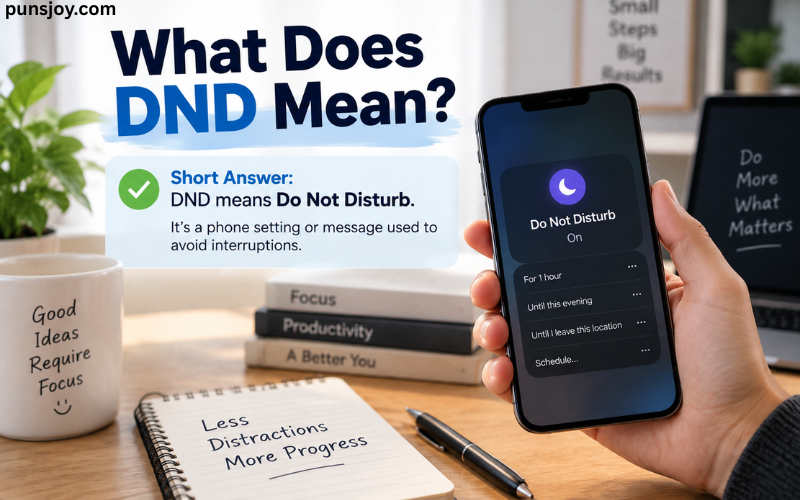
Yes, depending on your DND settings.
DND does not always block every call. Many phones allow users to choose which calls can get through.
For example, you may allow:
- Calls from favorite contacts
- Calls from selected people
- Repeated calls
- Emergency-related contacts
The exact options depend on your phone.
This is useful because you can reduce ordinary interruptions while still allowing important people to contact you.
If you expect an urgent call, I recommend checking your DND settings before turning the feature on. Otherwise, you may unintentionally silence a call you were waiting for.
Will Messages Come Through on DND?
Usually, yes. DND generally does not stop messages from being delivered.
Instead, it controls whether your phone alerts you about those messages.
For example, a friend can send me a text while my phone is on DND. The message may be delivered normally, but I may not hear a sound or feel a vibration.
Once I check my phone, I can usually see the message.
Some devices also let users decide whether messages from specific contacts can interrupt DND. This means you can create a balance between privacy, concentration, and accessibility.
Does DND Block Notifications?
DND can silence, reduce, hide, or otherwise limit notifications, but the exact behavior depends on your settings.
It is better to think of DND as a notification control system rather than a complete notification blocker.
Some alerts may still appear. Some may be delayed or hidden. Others may be allowed because you marked the related person or app as an exception.
For this reason, two people can both have DND enabled and experience slightly different results.
Can You Schedule DND?
Yes. Many modern smartphones allow DND to be scheduled.
This means I can tell my phone when I want DND to start and stop automatically.
For example, I could schedule it to turn on every night and turn off in the morning. I could also create a schedule for working hours.
Scheduling is useful because I do not have to remember to turn DND on every time. Once the schedule is configured, the phone handles it automatically.
Some devices also offer location- or activity-based options, depending on the operating system.
What Does DND Mean in Gaming?
DND can also mean Dungeons & Dragons.
Dungeons & Dragons is a tabletop role-playing game in which players create characters and participate in a shared fantasy adventure. One person usually serves as the Dungeon Master, who describes the world, controls many characters and creatures, and helps manage the game’s rules.
In a gaming conversation, “DND” may therefore have nothing to do with phone notifications.
For example, if someone says, “We are playing DND tonight,” they probably mean Dungeons & Dragons.
The context is the easiest way to determine which meaning applies.
If the conversation is about phones, notifications, calls, or messages, DND probably means Do Not Disturb. If it is about characters, campaigns, dice, fantasy adventures, or tabletop games, it probably means Dungeons & Dragons.
Other Meanings of DND
Although “Do Not Disturb” and “Dungeons & Dragons” are the most common meanings, DND can represent other terms in specific industries, organizations, or conversations.
This is why I would not interpret an abbreviation without considering the context.
If you see DND in a technical document, business conversation, game, medical setting, school assignment, or social media post, its meaning may be different.
When the meaning is unclear, look at the words around the abbreviation. The surrounding conversation usually provides enough information to determine what the writer means.
How Do I Know Which Meaning of DND Someone Means?
I usually look at the context first.
If someone says:
“My phone is on DND.”
They almost certainly mean Do Not Disturb.
If someone says:
“Are you joining our DND campaign?”
They most likely mean Dungeons & Dragons.
If someone says:
“DND, I’m sleeping.”
They are probably using DND as a short form of Do Not Disturb.
The subject of the conversation is the biggest clue. Technology and communication usually point toward Do Not Disturb, while tabletop gaming usually points toward Dungeons & Dragons.
Is DND the Same as Do Not Disturb?
Yes. In phone and messaging contexts, DND is simply an abbreviation for Do Not Disturb.
There is no major difference between saying “DND is on” and “Do Not Disturb is on.”
The shorter version is common because it is quick to type and easy to recognize.
You may see DND in phone settings, messages, online chats, workplace communication, and social media conversations.
Is DND a Good Feature to Use?
For many situations, yes.
I find DND particularly useful when I need to reduce interruptions without disconnecting completely.
It gives me more control over my phone. Instead of turning the device off, I can decide which alerts matter and which ones can wait.
The most important thing is to configure it properly. If you allow too many interruptions, DND may not provide much benefit. If you block everything, you could miss an important call.
A balanced setup usually works best.
Related Post: what-does-lmy-mean-in-text
Common Examples of DND
Here are a few simple examples that show how DND is used:
“I’m putting my phone on DND while I study.”
This means the person wants fewer phone interruptions while studying.
“Can you text me later? I’m on DND.”
This means the person is currently avoiding interruptions.
“DND is scheduled from 10 PM to 7 AM.”
This means the phone automatically limits interruptions during those hours.
“We are playing DND this weekend.”
In this case, DND most likely means Dungeons & Dragons.
The meaning becomes clear when you look at the context.
FAQs
What does DND mean in simple words?
DND usually means Do Not Disturb. It is a phone feature that reduces interruptions from calls, messages, and notifications. In texting, someone may use DND to tell others that they do not want to be disturbed.
What does DND mean in texting?
In texting, DND usually means Do Not Disturb. A person may use it to say that they are busy, sleeping, studying, working, or otherwise unavailable for interruptions.
What does DND mean on an iPhone?
On an iPhone, DND means Do Not Disturb, which is part of Apple’s Focus features. It allows users to control calls, notifications, and other interruptions.
What does DND mean on Android?
On Android, DND also means Do Not Disturb. It lets users control which calls, messages, apps, and alerts can interrupt them.
Does DND mean someone blocked me?
No. DND does not normally mean that someone has blocked you. DND is designed to limit interruptions. Blocking is a separate feature that restricts communication from a particular person or account.
Can I receive messages while DND is on?
Yes. In most cases, messages can still be delivered while DND is active. The difference is that your phone may not alert you immediately.
Can alarms work during DND?
On many phones, alarms can still sound while DND is active. However, settings vary by device, so it is worth checking your phone’s DND options if an alarm is important.
What does DND mean in gaming?
In gaming, DND commonly refers to Dungeons & Dragons, a tabletop role-playing game. The context usually makes this meaning easy to identify.
Is DND the same as silent mode?
No. Silent mode mainly controls sound, while DND provides more control over interruptions. Modern phones can combine or overlap these functions, depending on their settings.
Does DND turn off the internet?
No. DND normally does not turn off your internet connection. Your phone can remain connected to Wi-Fi or mobile data while notifications are limited.
Conclusion
So, what does DND mean? In most phone, texting, and messaging situations, DND means “Do Not Disturb.” It is a feature or phrase used to reduce interruptions from calls, messages, and notifications.
DND does not normally disconnect your phone from the internet or prevent messages from being delivered. Instead, it changes how your device alerts you. You can often customize it to allow important people, calls, alarms, or apps to get through.
The meaning can change when the context changes. In gaming, for example, DND commonly means Dungeons & Dragons.
The easiest way to understand DND is to look at the conversation around it. If the topic is notifications or phones, think Do Not Disturb. If the topic is tabletop role-playing, characters, dice, or fantasy adventures, think Dungeons & Dragons.
For everyday phone use, DND is a simple and useful way to create quiet time while keeping your device available when you need it.

Emily here. I write about puns, slang, and the quirky side of language because words are funnier than people give them credit for. Four years in, and I still laugh at my own jokes. Someone has to.
