

Is the Earth round or flat? It is one of the oldest questions people ask about the world they live on. The short answer is simple and settled: the Earth is round — more precisely, an oblate spheroid, a sphere very slightly squashed at the poles and bulging at the equator. It is not flat.
So why does the question keep coming back? Because the Earth is so enormous that standing on it feels like standing on something flat. A football pitch looks perfectly level, a calm sea stretches to the horizon in a straight line, and your eyes cannot see the curve from the ground. This guide gives you the definitive answer and the evidence you can check for yourself.
Related Post: Are There More Doors or Wheels?
Quick Answer
The Earth is round — an oblate spheroid — not flat.
The Earth is about 12,742 kilometres across and spins once every 24 hours. Its round shape explains ships disappearing hull-first over the horizon, the round shadow on the Moon during a lunar eclipse, time zones, the different stars visible from each hemisphere, and the thousands of photographs taken from space. No flat model explains all of these at once — the round model explains every one of them.
What Does "Is the Earth Round or Flat?" Mean?
The question asks about the shape of the planet we live on. "Round" means the Earth is a sphere — or very close to one — like a ball, curving away in every direction. "Flat" means the Earth is a disc, like a plate, with an edge somewhere that you could, in theory, fall off. The two ideas cannot both be true.
Most people ask for one of three reasons: they are genuinely curious; they have watched a flat-Earth video and want to know whether any of it is true; or they need a simple answer for a child who keeps bringing it up. Whatever brought you here, the answer is the same — but the evidence is worth knowing, because it is the kind you can check with your own eyes.
- A curious searcher wants the straight answer and the proof behind it.
- A sceptic of the textbooks has heard a flat-Earth claim and wants to know if it has been answered.
- A parent or teacher needs a clear explanation to give a child who has just asked.
The Evidence the Earth Is Round

The case for a round Earth rests on five separate lines of evidence, each simple enough to understand, and each impossible to explain if the Earth were flat.
Ships Disappear Hull-First Over the Horizon
Stand on a beach and watch a ship sail away. It does not shrink into a tiny dot and vanish all at once. The hull disappears first, then the deck, then the funnel, and finally the top of the mast sinks below the horizon. On a flat Earth, the whole ship would simply get smaller until it was too small to see, all at once.
Lunar Eclipses Show a Round Shadow
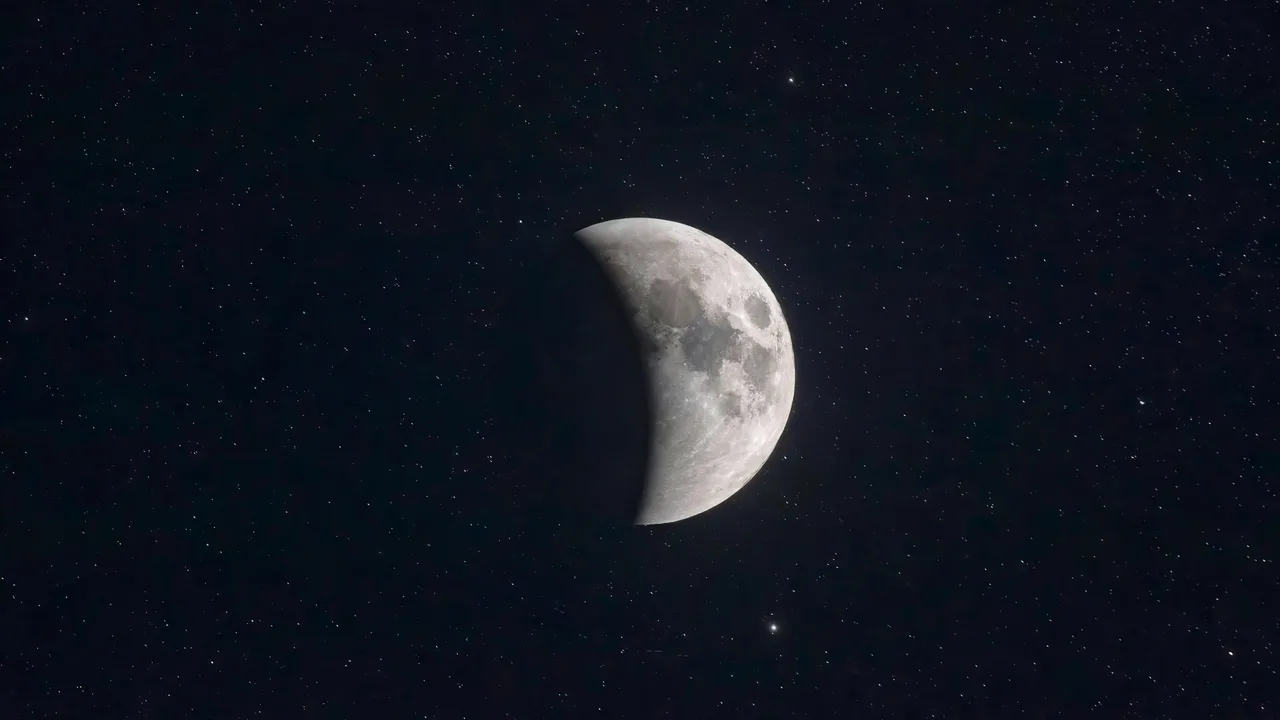
During a lunar eclipse, the Earth passes between the Sun and the Moon, and the Earth's shadow falls across the Moon. That shadow is always curved — a round edge. Only a sphere casts a round shadow from every angle. A flat disc would sometimes cast a straight-edged or oval shadow. It never does.
Photographs from Space
Since the first photographs of the whole Earth were taken from space in the 1960s, we have had direct pictures of a round planet. Thousands of photographs, taken by dozens of countries, all show the same thing: a blue sphere against the black of space. Some say they are faked — but that would need every space agency on Earth to agree on the same lie for sixty years.
Time Zones Only Work on a Round Earth
When it is midday in London, it is evening in Karachi and the middle of the night in Sydney. The Sun rises at different times in different places, because the Earth is a rotating sphere and the Sun can only light one half of it at a time. On a flat Earth, the whole disc would be lit at roughly the same time, and time zones would make no sense. The guide to take affect or take effect makes the same point about competing explanations: the one that fits all the facts wins.
- Ships vanish hull-first over the horizon, exactly as a curved surface predicts.
- Lunar eclipses always show a round shadow — only a sphere casts one from every angle.
- Photographs from space show a blue sphere.
- Time zones exist because the Sun lights only half a rotating sphere at a time.
- Different stars are visible in each hemisphere — only possible on a globe.
Different Constellations in Different Hemispheres
Stand in London and look at the night sky, and you see the Plough and the Pole Star. Stand in Sydney, and you see the Southern Cross — while the Pole Star sits below the horizon, out of sight. The stars you can see depend on where you stand. That is exactly what happens on a sphere: as you move around its curve, your view of the sky tilts with you.
Related Post: Inbetween or In Between: Which One Is Correct?
What Flat-Earth Claims Say — and Why They Fail
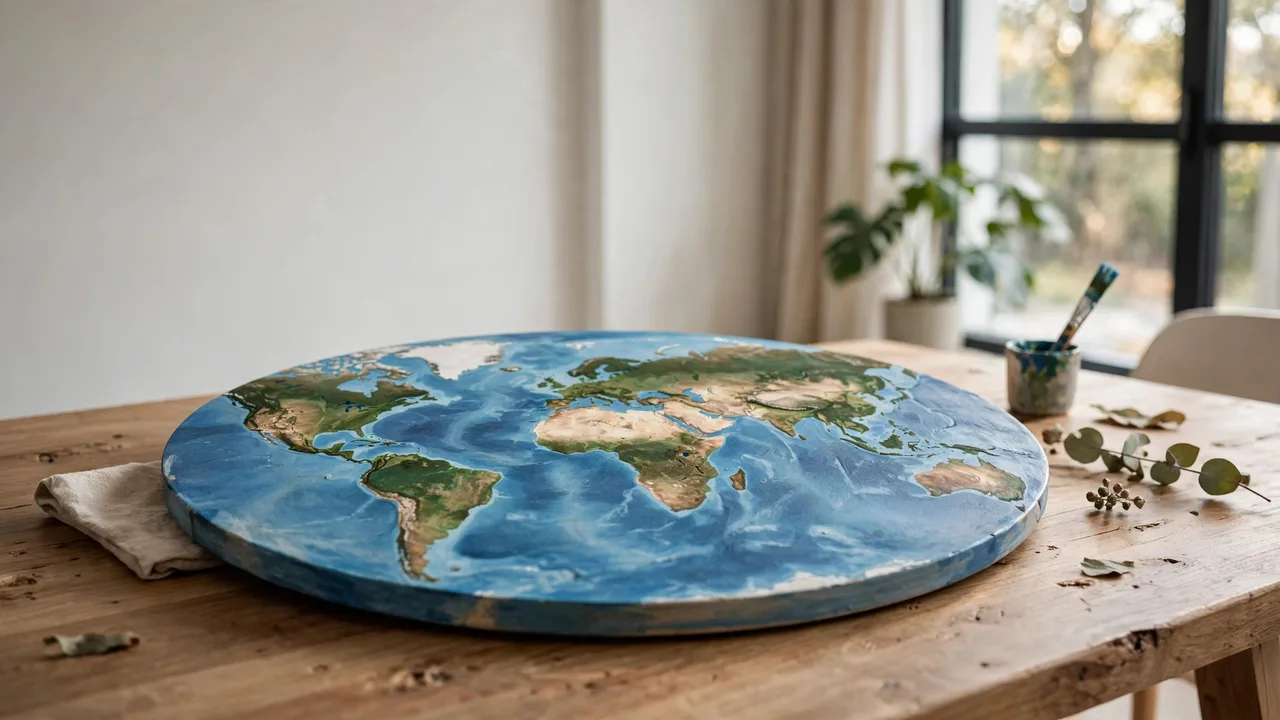
Flat-Earth claims share a pattern: they take one observation, offer a flat explanation for it, and ignore everything else that explanation fails to cover.
The best-known claim is that the horizon looks flat, so the Earth must be flat. It looks flat because the Earth is enormous. The curve is real but gentle — about eight inches of drop per mile — far too gentle for the human eye to pick out over the few miles you can see from the ground. Stand on a football pitch and it looks flat too, even though you are standing on a sphere nearly 13,000 kilometres across.
Another common claim is that water always finds its level, so the oceans would run off a curved Earth. Water does find its level — but "level" means the same distance from the centre of the Earth, pulled there by gravity. On a sphere, the sea follows the curve of the planet, which is why it looks flat to us. Gravity pulls everything towards the centre, so "down" is different in London and in Sydney.
- "The horizon looks flat." It does — because the Earth is huge.
- "Water always finds its level." True — and level means an equal distance from the Earth's centre, which is why the sea follows the curve.
- "Nobody feels the Earth spinning." True — and nobody feels a smooth train moving at a steady speed either.
- "Space photographs are faked." That would need every space agency on Earth to keep the same secret for sixty years.
- "Planes would have to dip their noses down." Planes fly at a constant height, and gravity keeps them following the curve.
The purposely or purposefully guide makes a similar point about words: a thing can look one way and be another, and the only way to settle it is to look at the evidence.
Round Earth vs Flat Earth Claims
Here are the two models side by side.
| Observation | Round Earth | Flat Earth |
|---|---|---|
| Ships disappear hull-first | Yes — the curve hides the hull first | No — it would shrink all at once |
| Lunar eclipse shadow | Yes — only a sphere does | No — a disc would cast oval shadows |
| Time zones | Yes — the Sun lights half a sphere | No — a disc would be lit all at once |
| Different stars per hemisphere | Yes — your view tilts as you move | No — everyone would see the same sky |
| Photographs from space | Yes — thousands of photos show a sphere | Only by claiming they are all faked |
| Gravity pulling "down" everywhere | Yes — gravity pulls towards the centre | No — a disc pulls sideways at the edges |
Look at the table and notice the pattern. The round Earth explains every observation with the same simple model. The flat Earth needs a different excuse for each one — the photographs are faked, the ships are an optical illusion — and the excuses contradict each other.
Common Misconceptions About the Earth's Shape

Even people who know the Earth is round sometimes carry a few wrong ideas about it.
The first is that the Earth is a perfect sphere. It is not — it is an oblate spheroid, slightly wider at the equator than it is tall from pole to pole. The difference is small, about 43 kilometres, and it is caused by the Earth's spin flinging the equator outward.
The second is that people once believed the Earth was flat and then suddenly discovered it was round. Educated people have known the Earth is round since the ancient Greeks, more than two thousand years ago. The idea that everyone in the Middle Ages thought the Earth was flat is a myth invented much later.
- "The Earth is a perfect sphere." Not quite — it is an oblate spheroid, wider at the equator than pole to pole.
- "People in the Middle Ages thought the Earth was flat." A myth. Educated people have known it was round since the ancient Greeks.
- "You can see the curve from a tall building." Not really — from a plane at cruising height you can just about see it.
- "The Earth is round because NASA says so." No — we knew it centuries before NASA existed.
- "Flat-Earthers are just uneducated." Not fair, and not true. Many are curious people misled by confident-sounding videos.
Examples in Real Life
The roundness of the Earth shows up in ordinary life more often than most people realise. Long-haul flights are the most obvious example. A flight from London to Sydney does not fly in a straight line across a flat map — it follows a great circle route, curving over the top of the world, because that is the shortest path on a sphere.
Your satnav is another. GPS receivers calculate your position by timing signals from satellites orbiting a spherical Earth. If the Earth were a disc, the whole system would fail. The spelling guide to surprise or suprise works the same way: the rule is simple, the proof is in front of you, and once you have seen it, you cannot unsee it.
- Booking a flight: great circle routes are the shortest path on a sphere.
- Using your satnav: GPS only works because satellites orbit a round Earth.
- Watching the sunset on holiday: the Sun sets at a different time a few hundred miles away.
- Looking out of a plane window: on a clear day at cruising height, the horizon bows very slightly.
- Ringing family abroad: when it is teatime in London, it is breakfast time in Sydney.
Common Mistakes About the Earth's Shape
People make the same few mistakes when talking about the Earth's shape.
- Saying "the Earth is flat because it looks flat." It looks flat because it is enormous. A football pitch looks flat too, and nobody thinks the pitch is the whole world.
- Claiming "nobody has ever seen the curve." Thousands have — astronauts, pilots, and anyone who has watched a ship sail over the horizon.
- Treating one video as proof. A confident video is not evidence. Evidence is what survives being checked.
- Mixing up "round" and "perfectly spherical." The Earth is an oblate spheroid — round, but very slightly squashed at the poles. That is still round, not flat.
- Assuming the question is settled by authority. It is settled because ships, eclipses, time zones, and star charts all agree.
FAQs
Is the earth round or flat?
The Earth is round — an oblate spheroid, a sphere very slightly squashed at the poles. It is not flat. The evidence includes ships disappearing hull-first, the round eclipse shadow, photographs from space, and time zones.
What shape is the Earth exactly?
The Earth is an oblate spheroid. It is about 12,742 kilometres across at the equator and about 43 kilometres less from pole to pole, because its spin bulges the equator outward. For everyday purposes, calling it round is accurate enough.
How do we know the Earth is round without going to space?
The ancient Greeks worked it out from ships disappearing over the horizon and the round shadow cast during a lunar eclipse. Time zones and the different stars in each hemisphere confirmed it later.
Why does the Earth look flat?
Because the Earth is enormous. The curve drops only about eight inches per mile, which is far too gentle for the human eye to notice over the few miles you can see from the ground.
Do flat-Earthers have any real evidence?
Flat-Earth claims are usually single observations — the horizon looks flat, water finds its level — given a flat explanation that ignores everything else. None of them explains ships, eclipses, time zones, and star charts all at once.
Is the Earth round or flat according to science?
According to science, the Earth is round. There is no serious scientific debate about it: astronomy, navigation, and satellite engineering all work on the basis of a round Earth.
Conclusion
So, is the earth round or flat? The Earth is round — an oblate spheroid, slightly squashed at the poles and bulging at the equator — and it is not flat. The answer has been settled for more than two thousand years, by evidence anyone can check: ships sinking hull-first, the round shadow of a lunar eclipse, and the different stars above each hemisphere.
The reason the question keeps coming back is not that the evidence is weak. It is that the Earth is so big that standing on it feels like standing on something flat. But feeling flat and being flat are different things. Next time someone asks you, you will not just know the answer — you will know the evidence behind it too.
Related Post: Surprise or Suprise: Which Spelling Is Correct?

Emily here. I write about puns, slang, and the quirky side of language because words are funnier than people give them credit for. Four years in, and I still laugh at my own jokes. Someone has to.
