

If you’ve received a message with “JP” and weren’t sure what it meant, you’re not alone. Text abbreviations often have different meanings depending on the conversation, social media platform, or the relationship between the people chatting.
In most text conversations, JP usually means “Just Playing.” People use it to let others know they are joking or not being serious. However, JP can also stand for “Just Practicing,” “Japanese,” or even someone’s initials, depending on the context.
In this guide, I’ll explain the most common meanings of JP in text, show when people use it, provide real-life examples, compare it with similar abbreviations, and answer frequently asked questions.
What Does JP Mean in Text?
The most common meaning of JP in texting is:
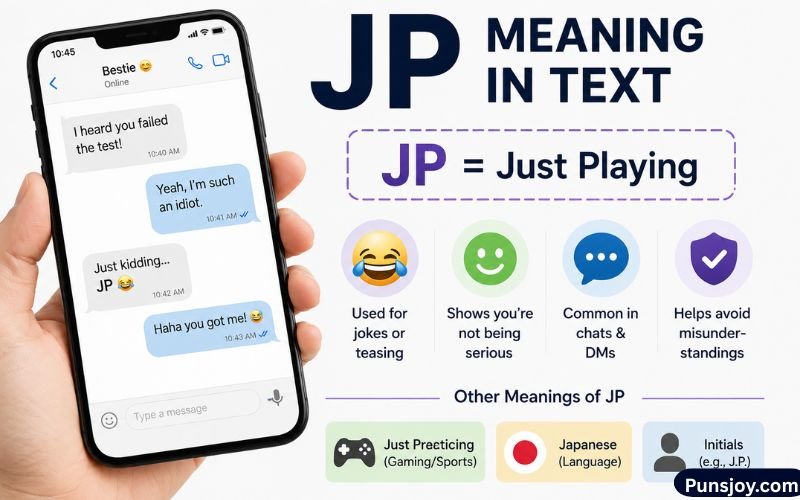
JP = Just Playing
It’s used after a joke, sarcastic comment, or playful statement to show that the sender isn’t serious.
For example:
- “You’re the worst teammate ever. JP 😂”
- “I’m deleting your number. JP!”
- “You owe me $1,000. JP.”
Adding JP helps avoid misunderstandings because text messages don’t include facial expressions or tone of voice.
Related Post: FR Meaning in Chat: What It Means, How to Use It, Examples, and More
Quick Answer Table
| Abbreviation | Meaning | Common Usage |
| JP | Just Playing | Joking with friends |
| JP | Just Practicing | Gaming, sports, music |
| JP | Japanese | Language or nationality |
| JP | Initials | A person’s name |
JP Meaning in Different Contexts
The meaning of JP changes depending on where you see it.
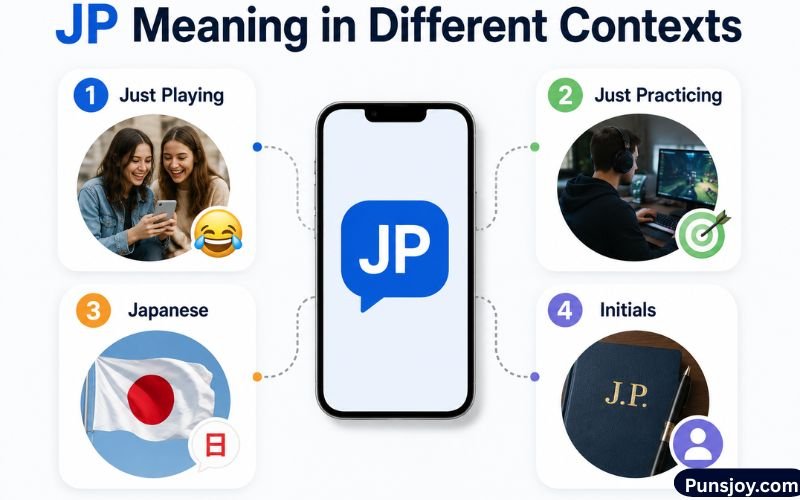
1. Just Playing (Most Common)
This is the meaning you’ll find most often in texting apps like:
- Messenger
- Instagram DMs
- Snapchat
- Discord
- iMessage
Examples:
Friend: You forgot my birthday.
You: I know… JP 😄
Friend: I sold your bike.
You: Wait… really?
Friend: JP!
Here, JP quickly tells the other person that it was only a joke.
2. Just Practicing
Gamers, musicians, athletes, and students sometimes use JP to mean Just Practicing.
Examples:
- “I’m not competing yet. JP.”
- “Missed every shot because I’m JP.”
- “Still JP before the tournament.”
In these conversations, JP means the person is simply practicing and doesn’t expect perfect results.
3. Japanese
Sometimes JP is used as a short form for Japanese.
Examples:
- “I watch JP dramas.”
- “Learning JP every day.”
- “JP subtitles are available.”
Here, JP refers to the Japanese language, culture, or entertainment.
4. Someone’s Initials
Sometimes JP isn’t slang at all.
It may simply refer to someone’s initials.
Examples:
- “JP is joining us later.”
- “Ask JP about the meeting.”
- “JP finished the project.”
Without context, this meaning can easily be confused with texting slang.
Related Post: What Does IMK Mean in Text? Everything You Need To Know
Is JP Positive or Negative?
Most of the time, JP is positive.
People use it to:
- Keep conversations light
- Make jokes
- Avoid sounding rude
- Show they aren’t serious
However, it can sometimes create confusion if the joke isn’t obvious.
For example:
“I broke your laptop. JP.”
Someone might panic before reading the final two letters.
Why Do People Use JP?
Text messages don’t show:
- Facial expressions
- Voice tone
- Body language
Because of this, jokes can easily be misunderstood.
Using JP helps people understand the message was meant to be funny.
Instead of writing:
“I’m only kidding.”
Many people simply type:
“JP”
It’s shorter and faster.
Related Post: What Does LMY Mean in Text? Meaning, Uses, Examples, and Replies
Examples of JP in Text Conversations
Example 1
Alex: You’re paying for dinner tonight.
Ryan: Fine.
Alex: JP 😂
Meaning: Alex was joking.
Example 2
Emma: I unfollowed you.
Sophia: Why?
Emma: JP lol
Meaning: Emma didn’t actually unfollow her.
Example 3
Mike: I’m quitting gaming forever.
Chris: Seriously?
Mike: JP 😂
Meaning: Mike isn’t actually quitting.
Example 4
Coach: Ready for tomorrow?
Player: Still JP today.
Meaning: The player is still practicing.
Example 5
Friend: What language are you studying?
You: JP.
Meaning: Japanese.
Related Post: What Does DTM Mean in Text? Common Meanings, Uses, Examples
JP on Social Media
You’ll often see JP on:
- TikTok comments
- Instagram captions
- Snapchat
- Discord
- X (formerly Twitter)
- YouTube comments
People often write something dramatic and then end it with JP.
Example:
“I’m deleting my account. JP 😂”
This tells followers it was only a joke.
JP in Gaming
Gaming communities frequently use abbreviations.
In games, JP can mean:
- Just Practicing
- Joke Post (less common)
- A player’s initials
Example:
“I’m bad today because I’m JP.”
Meaning:
“I’m just practicing.”
Related Post: What Does SS Mean in Text? Common Meanings, Uses, Examples!
JP in School and College Chats
Students may use JP in different ways.
Examples:
“I’m JP before the exam.”
Meaning:
“I’m just practicing.”
Another example:
“JP notes are online.”
Meaning:
Japanese language notes.
The context makes the meaning clear.
JP in Workplace Messages
In professional conversations, JP is less common.
Instead of writing:
“JP”
Most people simply write:
“Just kidding.”
or
“I’m joking.”
Using clear language avoids confusion in business communication.
JP vs JK
Many people confuse JP with JK.
| JP | JK |
| Just Playing | Just Kidding |
| Less common | Very common |
| Mostly casual | Used everywhere |
| Means joking | Means joking |
Both usually mean the same thing.
Example:
“I’m stealing your fries.”
JP
or
JK
Both tell the reader it was only a joke.
JP vs LOL
These abbreviations have different purposes.
| JP | LOL |
| Means the message was a joke | Means something is funny |
| Explains intent | Shows laughter |
| Usually comes after a joke | Can appear anywhere |
Example:
“I’m moving to Mars. JP 😂”
The JP explains the joke.
The emoji or LOL shows amusement.
JP vs JK
Although many people use them interchangeably, JK is still much more popular than JP.
Examples:
“I’m deleting Instagram. JK.”
“I’m deleting Instagram. JP.”
Both work, but JK is recognized by more people.
Related Post: What Does YWA Mean in Text? Meaning, Uses, Examples, and When to Use It
When Should You Use JP?
You can use JP when:
- You’re teasing a friend.
- You’re making a harmless joke.
- You don’t want someone to take your message seriously.
- You’re joking in a group chat.
- You’re keeping the conversation playful.
Example:
“I ate all your snacks.
JP.”
When You Shouldn’t Use JP
Avoid using JP when discussing:
- Medical emergencies
- Financial issues
- Legal matters
- Work instructions
- School assignments
- Serious family conversations
For example:
“The meeting is canceled. JP.”
This could confuse coworkers.
Instead, keep professional communication clear.
Common Text Examples
Here are more examples.
- “I’m blocking you. JP 😂”
- “You owe me coffee forever. JP.”
- “Your cooking is terrible… JP!”
- “I forgot your birthday. JP.”
- “I’m moving overseas. JP.”
- “You’re fired. JP.”
- “I’m selling your car. JP.”
- “I adopted your dog. JP.”
- “I won the lottery. JP.”
- “I’m famous now. JP.”
How to Reply When Someone Says JP
If someone ends a message with JP, they’re usually telling you they were joking.
You can reply with:
- “Haha, good one!”
- “You almost got me.”
- “I believed you!”
- “Nice joke.”
- “😂”
- “You’re funny.”
- “You scared me.”
These responses keep the conversation relaxed.
Is JP Popular?
JP isn’t as widely used as abbreviations like:
- LOL
- BRB
- IDK
- IMO
- JK
- TBH
However, you’ll still find it in casual chats, especially among friends who already understand the abbreviation.
Related Post: What Does YH Mean in Text? Common Uses, Examples, and When to Use It
Does JP Always Mean Just Playing?
No.
Always read the surrounding conversation.
For example:
“I’m learning JP.”
This almost certainly means Japanese, not Just Playing.
Likewise:
“I’m JP before the tournament.”
This likely means Just Practicing.
Context is everything.
Why Context Matters
Many abbreviations have multiple meanings.
The same two letters can represent completely different ideas depending on who is writing them.
Ask yourself:
- What are they talking about?
- Who sent the message?
- Is the conversation serious?
- Is it about games, language, or jokes?
These clues usually reveal the correct meaning.
Tips for Using JP Correctly
Here are a few simple tips:
- Use it mainly with friends.
- Don’t use it in formal emails.
- Make sure the joke is obvious.
- Don’t use it during serious discussions.
- Remember that not everyone knows the abbreviation.
If you’re unsure, writing “Just kidding” is usually the safer option.
Related Post: What Does STG Mean in Text? Meaning, Uses, & Examples!
Frequently Asked Questions
What does JP mean in text messages?
The most common meaning is “Just Playing,” which tells the reader that the previous statement was meant as a joke.
Does JP mean Just Playing or Just Practicing?
It can mean either. Just Playing is more common in casual texting, while Just Practicing appears more often in gaming, sports, or learning situations.
Is JP the same as JK?
They are similar because both indicate that someone is joking. However, JK (Just Kidding) is much more widely recognized.
What does JP mean on Snapchat?
Most Snapchat users use JP to mean Just Playing, especially after teasing a friend.
What does JP mean on Instagram?
On Instagram, JP usually means Just Playing in comments, captions, and direct messages. It may also refer to Japanese if the post is about language or culture.
Can JP mean Japanese?
Yes. In discussions about languages, anime, travel, or entertainment, JP often stands for Japanese.
Is JP considered internet slang?
Yes. JP is an internet abbreviation commonly used in text messages and online conversations, although it isn’t as common as slang terms like LOL or JK.
Should I use JP in professional emails?
No. It’s better to use complete phrases such as “I’m joking” or “Just kidding” to avoid misunderstandings in workplace communication.
Final Thoughts
The meaning of JP in text depends on the conversation, but in most cases, it stands for “Just Playing.” It’s a simple way to show that a message was meant as a joke and shouldn’t be taken seriously. In other situations, JP can also mean “Just Practicing,” “Japanese,” or even refer to someone’s initials.
Whenever I see JP, I first look at the surrounding conversation before deciding what it means. That small habit makes it much easier to understand the sender’s intent and respond appropriately. If you’re ever unsure, asking for clarification is the quickest way to avoid confusion.

Emily here. I write about puns, slang, and the quirky side of language because words are funnier than people give them credit for. Four years in, and I still laugh at my own jokes. Someone has to.
